As the best livestock rubber flooring manufacturer, we understand the importance of selecting the right flooring to improve animal comfort, safety, and farm productivity. Farm flooring solutions are becoming an essential choice for large livestock farms. Unlike traditional hard surfaces, livestock flooring solutions provide better grip, cushioning, and hygiene for everyday farm operations. For farms managing cows, horses, or dairy animals at scale, choosing the right rubber flooring can directly impact both animal well-being and farm performance.
What Is Livestock Rubber Flooring?
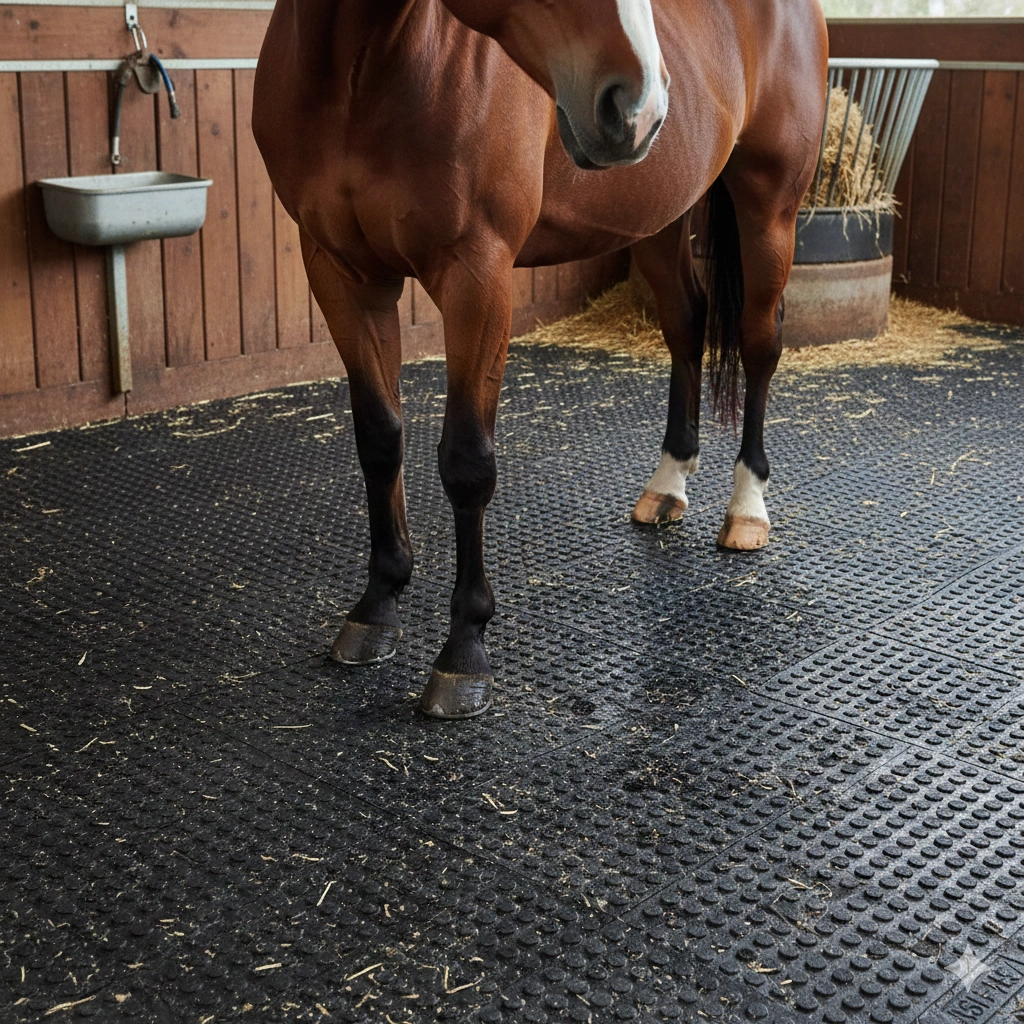
Livestock rubber flooring is designed specifically for farm environments. It is manufactured using durable rubber compounds that can withstand heavy weight, moisture, and daily wear. The surface remains flexible yet strong, making it suitable for both indoor and outdoor agricultural applications.
Types of Livestock Rubber Flooring for Farm Needs
Rubber flooring is available in different formats based on farm requirements:
-
Rubber mats for dairy farm stalls or resting areas
-
Rubber rolls for long walkways and corridors
-
Interlocking rubber systems for large open spaces
Each type serves a specific purpose depending on animal movement and usage intensity.
Experience as a Leading Livestock Rubber Flooring Manufacturer
With over a decade of experience in manufacturing rubber flooring for dairy farms, rubber matting for cows, and horse mats, RubbMat has the expertise to address the unique challenges of high-traffic environments. Our flooring solutions are designed with insights gained from years of serving livestock farms, ensuring durability and ease of maintenance. Whether in dairy barns, free-stall sheds, or milking parlors, RubbMat’s livestock flooring systems are tailored to meet the demands of daily farm operations.
Why Flooring Quality Matters in Large Livestock Operations
Flooring plays a major role in livestock health. Poor-quality surfaces often lead to leg injuries, joint stress, and hoof problems, especially in high-traffic farm areas. Slippery floors also increase the risk of falls, causing long-term health issues for animals.
Key health benefits of proper livestock flooring include:
-
Reduced joint and hoof stress
-
Lower risk of slips and injuries
-
Improved resting comfort
-
Better blood circulation during standing
Role of Flooring in Farm Productivity
Healthy animals perform better. Comfortable farm flooring solutions help livestock move freely, rest properly, and experience less stress. Over time, this results in better productivity, lower veterinary expenses, and reduced maintenance costs for farm owners.
Applications of Rubber Flooring in Large Farms
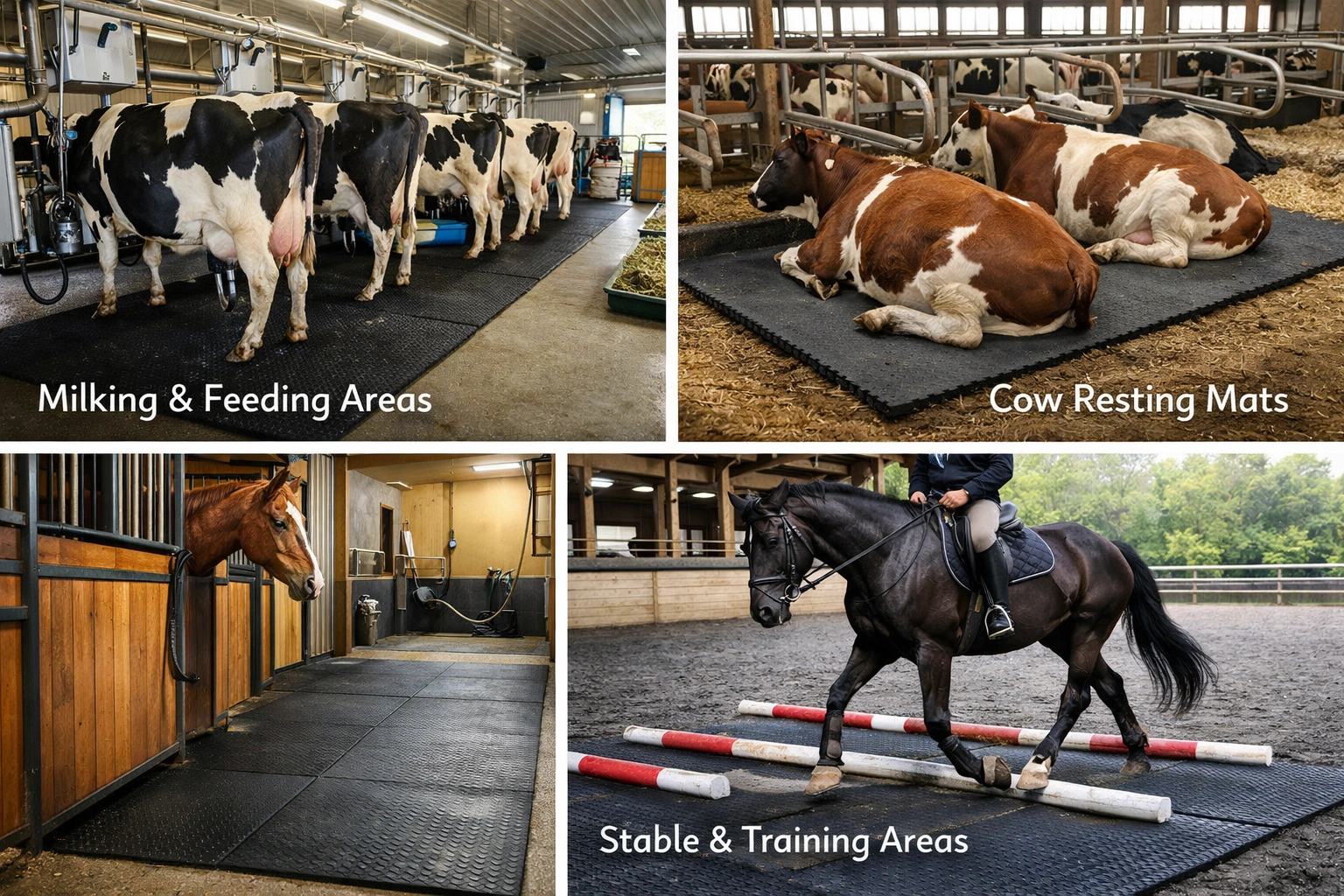
Rubber Mats for Dairy Farms
Rubber mats for dairy farm environments are commonly used in milking parlors, resting zones, and feeding areas. These mats help reduce fatigue in cows during long standing periods and improve hygiene standards.
Rubber Mats for Cows
Rubber mats for cows are designed to distribute weight evenly and minimize pressure on joints. The anti-slip surface ensures safer movement, even in wet conditions, reducing the chances of injuries.
Horse Mats for Stables and Training Areas
Horse mats are widely used in stables, wash areas, and training zones. Their shock-absorbing properties protect horse joints while maintaining stability during movement. Durable construction ensures long service life under heavy use.
Key Benefits of Rubber Flooring for Livestock
Rubber flooring offers multiple advantages for large farms, including:
-
Anti slip rubber flooring for safer animal movement
-
Cushioned support to reduce joint stress
-
Noise reduction in barns and stables
-
Easy cleaning and improved hygiene
-
Long-lasting performance in demanding environments
These benefits make livestock flooring solutions more reliable than traditional materials.
Heavy Duty Rubber Floor Matting for High-Traffic Farm Areas
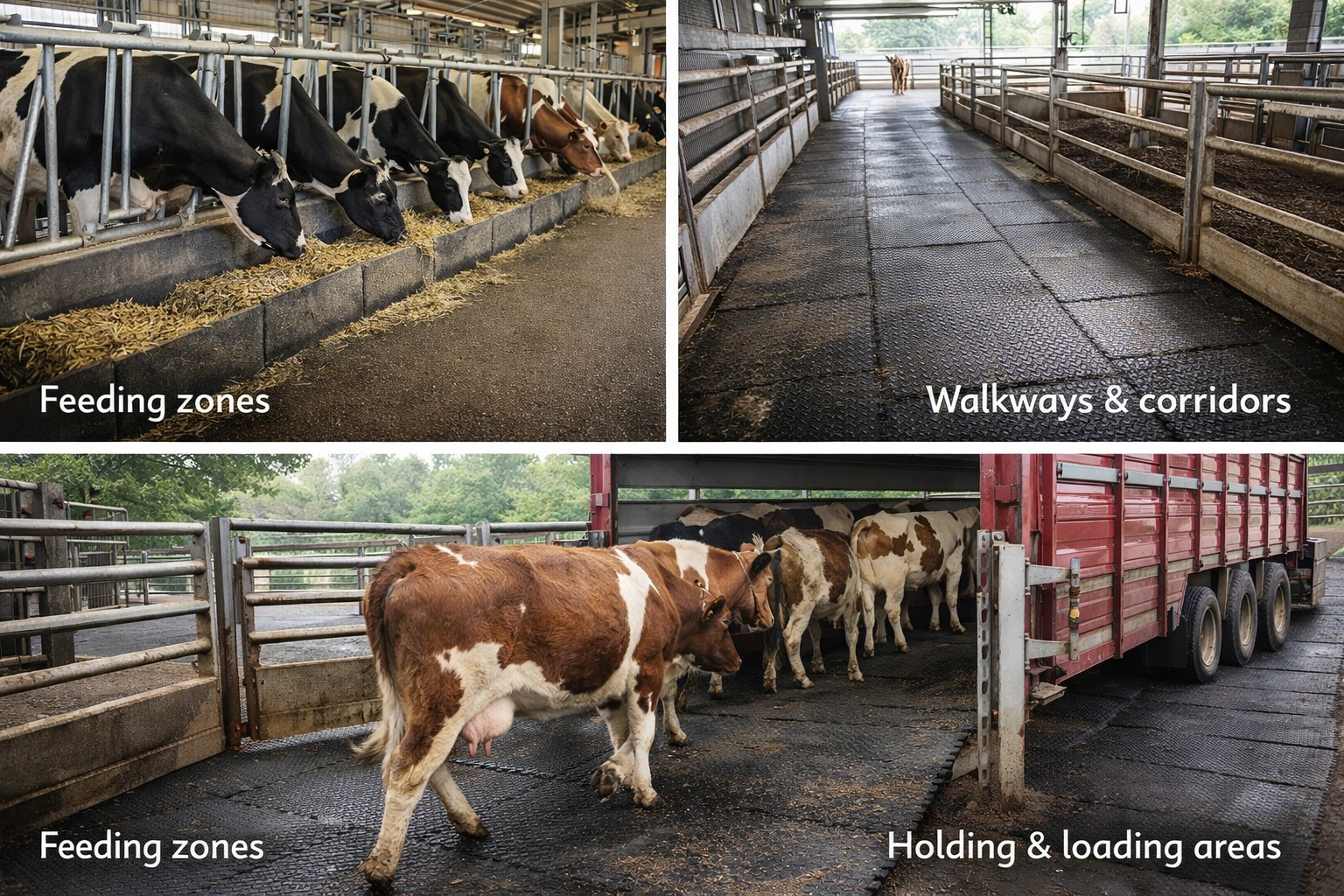
Livestock rubber floor matting is manufactured with higher thickness and density to handle constant load and movement. It resists cracking, deformation, and surface wear even under continuous use.
Where Heavy Duty Rubber Floor Matting Is Used
Common high-traffic farm areas include:
-
Feeding zones
-
Walkways and corridors
-
Holding and loading areas
Using heavy duty rubber floor matting in these spaces improves animal safety while extending the lifespan of farm flooring systems.
How to Install Interlocking Rubber Mats in Livestock Farms
Interlocking rubber mats are designed for easy and secure installation in livestock environments. When installed correctly, these mats provide long-lasting support, improved safety, and stable performance in high-traffic farm areas.
Step-by-step installation process:
-
Prepare the base surface: Ensure the floor is clean, dry, and level. Concrete or well-compacted farm flooring surfaces provide the best stability.
-
Start installation from one corner: Begin laying interlocking mats from a straight edge or corner to maintain proper alignment across the area.
-
Lock the mats firmly together: Connect each mat using the built-in interlocking edges. This prevents shifting under animal movement and heavy weight.
-
Trim edges for a perfect fit: Cut mats where needed around walls, pillars, or feeding equipment using a sharp utility knife.
-
Inspect stability and finish: Walk over the installed mats to ensure they sit evenly and remain firmly connected.
Why interlocking rubber mats work well in large farms:
-
Quick installation with minimal downtime
-
Secure fit that resists movement in busy areas
-
Easy replacement of individual mats
-
Suitable for dairy barns, walkways, and holding zones
This installation method helps maintain safe, durable, and easy-to-manage livestock flooring systems across large farm operations.
Comparison: Rubber Flooring vs Concrete for Livestock Flooring
|
Feature |
Rubber Flooring |
Concrete Flooring |
|
Comfort |
Soft and cushioned |
Hard and rigid |
|
Slip Resistance |
High |
Low when wet |
|
Hygiene Level |
High (Easy to sanitize) |
Low (Traps bacteria) |
|
Maintenance |
Easy to clean |
Requires frequent repair |
|
Durability |
Long-lasting |
Cracks over time |
|
Animal Safety |
High |
Higher injury risk |
This comparison shows why agricultural rubber flooring is increasingly preferred in modern livestock farms.
Choosing the Right Livestock Rubber Flooring Manufacturer
Not all livestock rubber mats perform the same under heavy farm conditions. Generic flooring options often wear out quickly when exposed to animal weight, moisture, and daily movement. Choosing a trusted rubber flooring manufacturer ensures durability, performance, and low long‑term cost.
What Makes RubbMat Stand Out
RubbMat is a global rubber mat manufacturer with over a decade of experience serving large livestock farms worldwide. The company focuses on purpose-built flooring solutions designed specifically for livestock comfort and farm performance. RubbMat works closely with dairy farm owners, veterinarians, and livestock consultants to design flooring systems that improve animal welfare and long-term farm efficiency.
Key strengths include:
-
Premium recycled rubber engineered for heavy-duty farm use
-
Global quality standards aligned with EU and US safety requirements
-
Reliable bulk supply for large farm and export projects
Conclusion
Livestock flooring solutions offer a practical and long-lasting option for large farms. From improved animal comfort to enhanced safety and reduced maintenance, these solutions address key challenges faced by modern farm operations. By choosing RubbMat livestock rubber mat systems from an experienced livestock flooring manufacturer, farm owners can ensure healthier animals and more efficient day-to-day management.
FAQ
1. How do I choose the best livestock rubber flooring manufacturer?
Choose a livestock rubber flooring manufacturer with proven industry experience, certified quality standards, and expertise in farm-specific flooring solutions.
2. Is rubber flooring better than concrete for livestock farms?
Yes, rubber flooring is better than concrete for livestock farms as it provides cushioning, better grip, and improved animal comfort.
3. What thickness of rubber flooring is best for cows?
For dairy cows and cattle, rubber flooring between 18 mm and 25 mm is ideal.
4. Are rubber mats easy to clean in dairy farms?
Yes, rubber mats for dairy farm environments are easy to wash and maintain.