Restaurant floors face water, oil, grease, food spills, heat, and heavy foot traffic. Choosing the right Restaurant Mats affects staff comfort, slip resistance, hygiene, and long-term cost.
Rubber and PVC are both common options, but they perform differently in commercial kitchens. Briefly state the article will compare durability, safety, comfort, cleaning, cost, and best use cases.
What Are Rubber Restaurant Mats?
Rubber mats are heavy-duty mats made for demanding food service areas.
They are commonly used as restaurant floor mats, commercial kitchen mats, and anti-fatigue mats.

Highlight benefits:
-
Better cushioning for long-standing hours
-
Strong grip in wet or greasy areas
-
Better durability under heavy movement
-
Suitable for back-of-house kitchen zones
What Are PVC Restaurant Mats?
PVC mats are synthetic plastic-based mats usually lighter and often more budget-friendly.
They may work well in light-duty areas or places where chemical resistance is important.
Highlight limitations:
-
May not offer the same comfort as rubber
-
Can become less flexible over time
-
May not perform as well under heavy kitchen traffic
-
Lower weight can sometimes cause movement if not properly placed
Rubber Mats vs PVC Restaurant Mats: Quick Comparison
|
Factor |
Rubber Mats |
PVC Mats |
|
Durability |
Better for heavy traffic |
Good for light to medium use |
|
Comfort |
Strong anti-fatigue support |
Moderate comfort |
|
Slip Resistance |
Strong grip, especially textured designs |
Good, but depends on design |
|
Cleaning |
Easy to wash, may need proper drying |
Easy to clean |
|
Weight |
Heavier, stable on floor |
Lighter, easier to move |
|
Cost |
Higher initial cost |
Usually lower initial cost |
|
Best For |
Commercial kitchens, wet areas, heavy-use zones |
Light-duty prep areas, temporary use |
Which Mat Is Better for Commercial Kitchens?
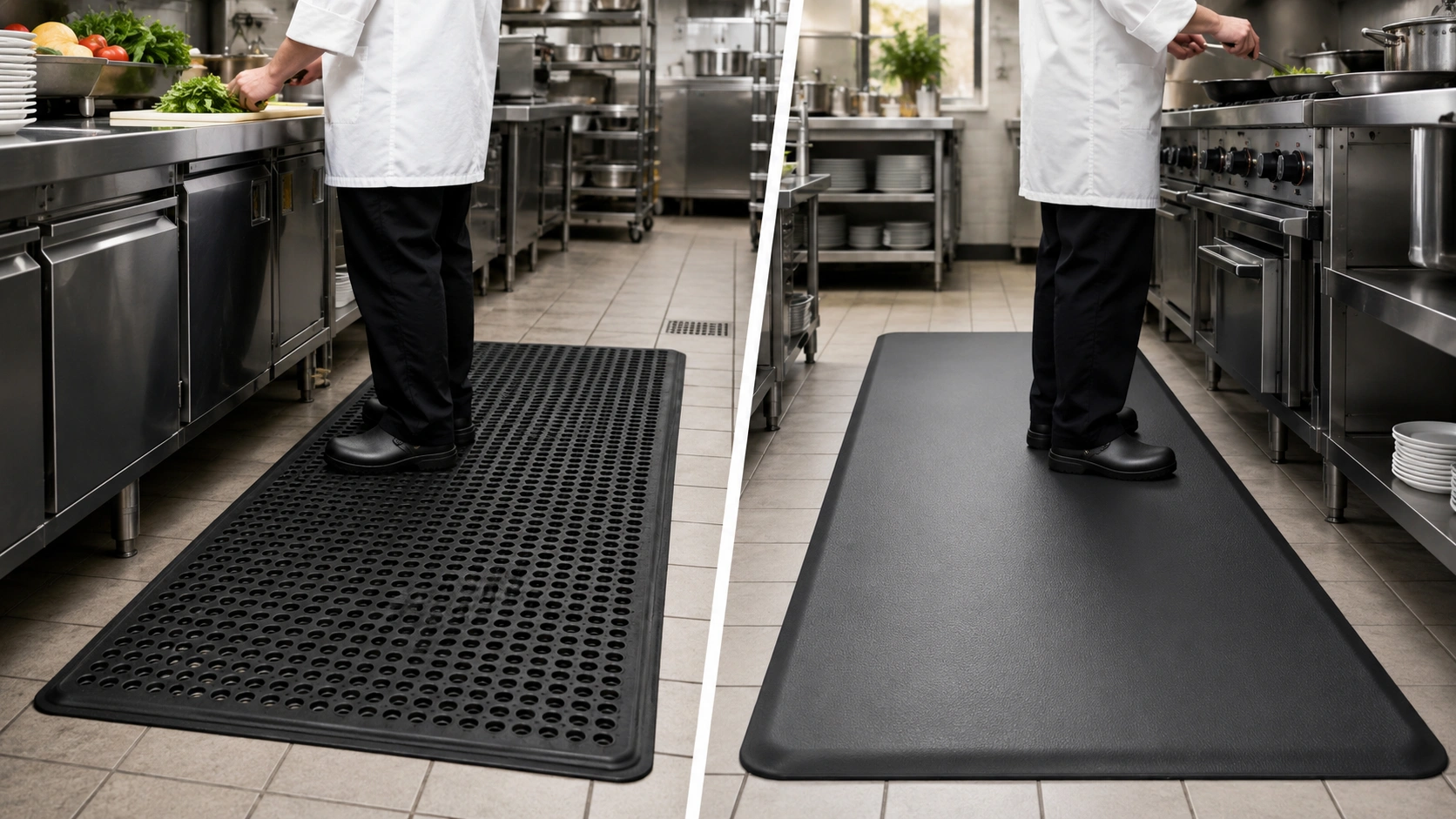
Rubber mats are generally better for commercial kitchen mats because of heavy-duty performance.
Kitchens need mats that handle:
-
Continuous standing
-
Water and oil spills
-
Food preparation traffic
-
Repeated cleaning
-
Heavy shoes, trolleys, and equipment movement
Restaurant kitchen mats should support comfort and reduce floor-level risk.
PVC can be considered for less demanding areas, but rubber is usually the stronger long-term option.
Are Rubber Mats More Comfortable Than PVC Mats?
Yes, rubber mats usually provide better cushioning.
Staff in restaurants stand for long hours near cooking stations, dishwashing zones, and counters.
Anti-fatigue rubber mats can reduce pressure on feet, knees, and lower back.
Which Mat Offers Better Slip Resistance?
Slip resistance depends on mat design, surface pattern, drainage holes, and floor condition.
Rubber restaurant floor mats often provide stronger grip because of natural friction and heavier placement.
PVC mats can also be slip-resistant, but lightweight designs may shift if not secured.
Include practical advice:
-
Use drainage mats in wet areas
-
Avoid curled or damaged mats
-
Clean grease buildup regularly
Which Is Easier to Clean: Rubber or PVC Restaurant Mats?
Both can be cleaned easily, but maintenance style differs.
Rubber mats may need washing, brushing, draining, and proper drying.
PVC mats can be wiped or washed easily, but quality matters.
Cleaning checklist:
-
Shake off loose food particles
-
Wash with mild cleaner
-
Scrub grease-prone areas
-
Rinse properly
-
Dry before placing back
Which Mat Lasts Longer in a Restaurant?
Rubber mats usually last longer in heavy-use commercial settings.
-
Better resilience
-
Stronger structure
-
Better load handling
-
Less chance of cracking under pressure
PVC mats may be suitable where cost is the main concern or traffic is lighter.
Cost Comparison: Rubber Mats vs PVC Mats
PVC mats usually have a lower upfront cost.
Rubber mats may have a higher initial price but better long-term value in busy restaurants.
Cost per use:
-
How long the mat lasts
-
How much comfort it provides
-
How often it needs replacement
-
Whether it stays stable in high-traffic areas
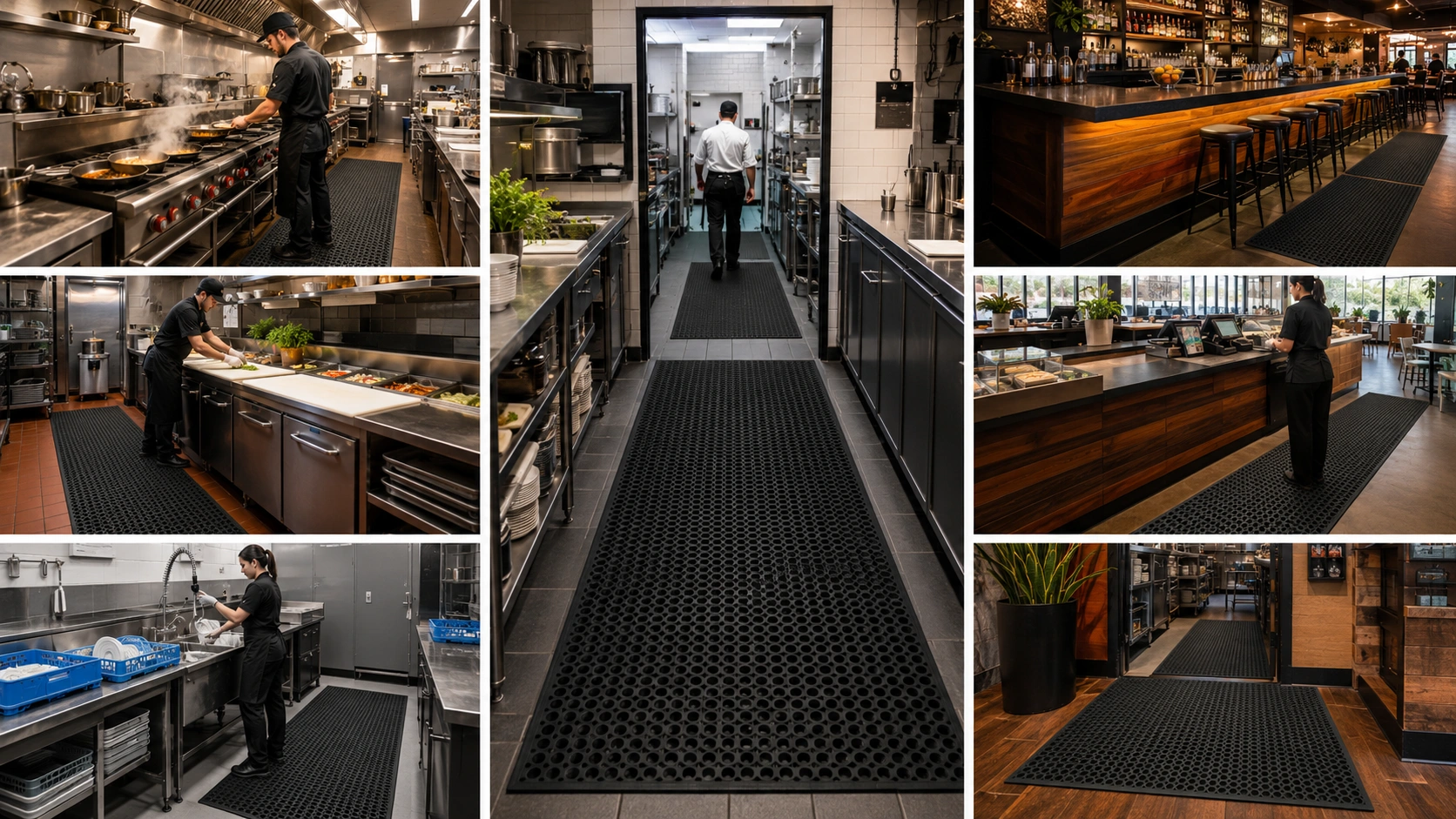
Best Areas to Use Rubber Restaurant Mats
-
Cooking line
-
Dishwashing section
-
Food preparation area
-
Bar counter
-
Service counter
-
Walkways with high foot traffic
-
Entrance to back kitchen
-
Wet areas where drainage is needed
For busy kitchens, rubber restaurant kitchen mats are usually a stronger choice.
High-quality commercial kitchen mats can help improve comfort and floor safety.
Best Areas to Use PVC Restaurant Mats
-
Light-duty service areas
-
Dry zones
-
Temporary floor coverage
-
Low-traffic prep spaces
-
Areas where easy movement and low cost matter more than heavy-duty durability
How to Choose the Right Restaurant Mats for Your Business?
Buyer checklist:
-
Check the area wet, dry, greasy, or heavy-traffic
-
Look at mat thickness
-
Choose the right surface, textured, bubble, ring, or drainage pattern
-
Check the edges, beveled or interlocking edges reduce movement
-
Think about cleaning, mats should be easy to lift, wash, and dry
-
Consider long-term value, durability matters more than only price
-
Match mat type with use case, kitchen, counter, entrance, or walkway
Conclusion
Rubber mats are better for most commercial kitchens because they offer stronger durability, comfort, grip, and long-term value.
PVC mats can be useful for light-duty or budget-sensitive areas.
For restaurants, hotels, cafes, cloud kitchens, and food preparation spaces, rubber Restaurant Mats are usually the more reliable choice.
Explore RubbMat restaurant floor mats designed for comfort, grip, and long-lasting performance in demanding food service environments.
FAQs
1. Are rubber mats better than PVC mats for restaurants?
Yes, rubber mats are usually better for busy restaurant kitchens because they offer better durability, comfort, and floor grip.
2. What type of mat is best for a commercial kitchen?
Heavy-duty rubber commercial kitchen mats with anti-fatigue and slip-resistant surfaces are usually best for wet, greasy, and high-traffic kitchen areas.
3. Are PVC restaurant mats worth buying?
PVC mats can be worth buying for light-duty or low-traffic areas, but they may not last as long as rubber mats in demanding restaurant kitchens.
4. How do I clean restaurant kitchen mats?
Remove loose dirt, wash with mild cleaner, scrub greasy areas, rinse properly, and dry the mats before placing them back on the floor.
5. Where should restaurant floor mats be placed?
They should be placed near cooking stations, dishwashing areas, prep counters, service counters, and wet walkways where staff stand or move frequently.