Choosing the correct rubber mat thickness plays a major role in safety, comfort, and long-term durability, whether you're setting up a home gym, managing a commercial fitness center, protecting livestock in barns, or improving workplace flooring in industrial environments. The right thickness ensures better shock absorption, improved stability, and protection for both surfaces and users. While rubber mats may look similar, each thickness level supports a different type of activity, load, or foot traffic.
This guide helps you understand how to select the perfect thickness of rubber floor mats, gym floor mats, horse stall rubber mats, or heavy duty industrial floor mats depending on where and how you plan to use them.
What Is Rubber Mat Thickness & Why Does It Matter?
Rubber mat thickness typically ranges from 4mm to 25mm, and choosing the right level is essential to match your usage conditions. Thicker mats offer better cushioning, impact resistance, and noise control, while thinner mats are suitable for light use where basic floor protection is required.
Rubber mats are widely used across different environments such as fitness areas, barns, walkways, manufacturing units, and commercial workspaces. Whether you're installing rubber gym flooring, home gym rubber mats, or industrial rubber flooring, thickness determines performance. Thin mats may not provide enough shock absorption for heavy weights, but overly thick mats may not be necessary for light activities or basic anti-slip needs.
What Thickness of Rubber Mat Do I Need for a Gym?
Gym environments differ in intensity, equipment load, and usage patterns. Therefore, picking the right thickness helps protect your subfloor, reduce noise, and enhance training comfort.
Recommended Thickness for Home Gyms
For light exercises, yoga, stretching, or basic cardio, 6mm–10mm mats are usually sufficient. These thickness levels offer essential support without adding unnecessary bulk. Many homeowners prefer home gym rubber mats because they're lightweight, easy to clean, and provide a non-slip surface. They also work well for compact workout corners or multifunctional rooms where space efficiency matters.
Recommended Thickness for Commercial Gyms
commercial gym flooring experience higher footfall, heavier equipment, and intense workouts. The ideal thickness ranges from 10mm to 15mm, especially for areas holding weight machines, benches, or training equipment. This category of mats includes gym floor mats and rubber gym flooring, which are engineered for durability and shock absorption. They reduce vibration, prevent slipping, and ensure long-lasting performance.
Best Thickness for Heavy Weightlifting Zones
If your gym includes deadlifting platforms, CrossFit zones, or areas where users drop weights frequently, you need mats between 17mm and 25mm. These thicker mats function as heavy duty rubber mats, offering superior protection to both your flooring and equipment. This thickness is recommended for serious fitness centers, athletic facilities, and bodybuilding gyms.
What Thickness Is Best for Barns & Horse Stalls?
Rubber mats are widely used in barns, wash bays, and animal stalls because they offer traction, cushioning, and hygiene benefits. Thickness plays a critical role here because animals, especially horses, need stable and shock-absorbent surfaces.
Recommended Thickness for Horse Stalls
The most suitable thickness for horse stalls is 12mm to 17mm. These horse stall rubber mats provide comfort under the animal’s weight, reduce joint stress, and offer excellent grip for both standing and lying positions. They also prevent fatigue and injuries, making them essential for long-term animal care.
Best Thickness for Barn Walkways & Wash Bays
Walkways require stability, anti-slip features, and easy cleaning. A thickness of 10mm to 12mm works best in these areas. Mats in this range create a safe, durable surface that handles moisture, mud, and daily foot traffic effectively.
What Thickness Is Ideal for Industrial Rubber Flooring?
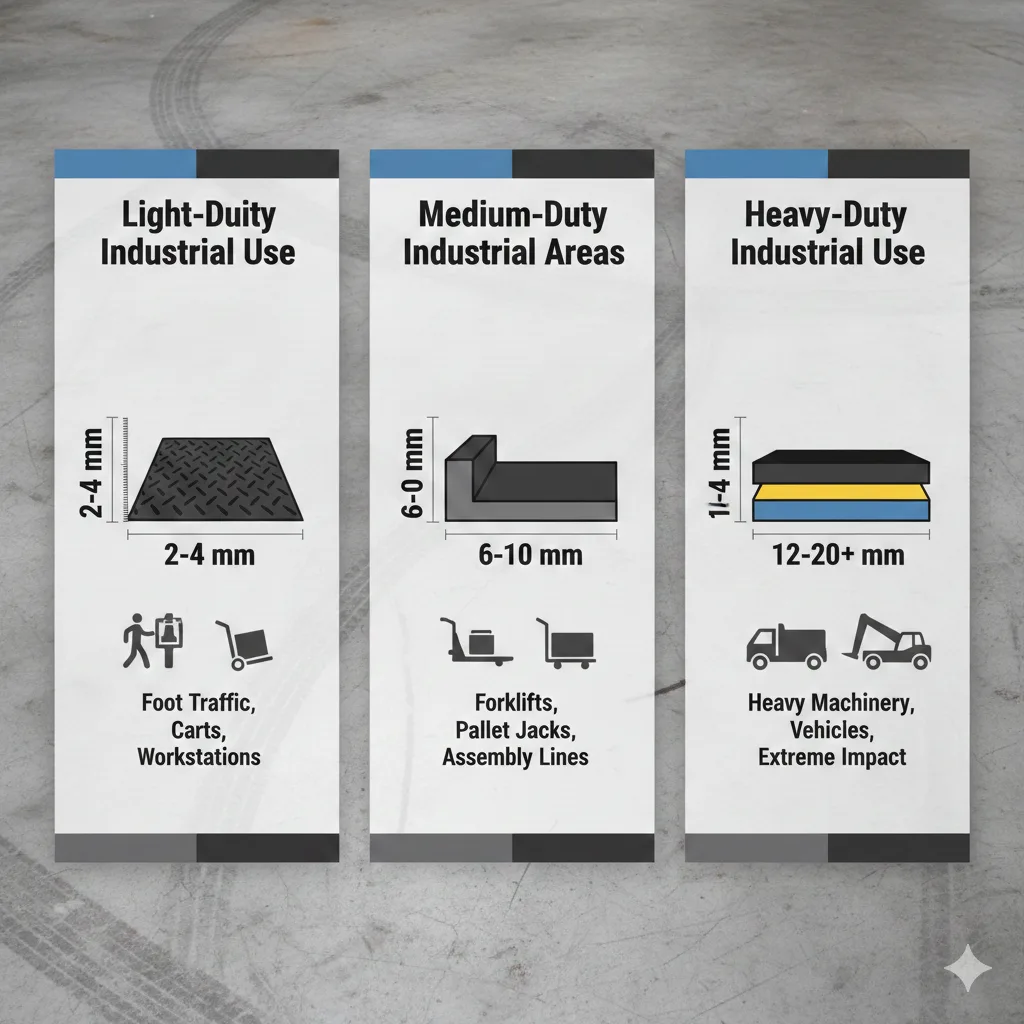
Industrial spaces involve heavy machinery, continuous foot movement, oil exposure, and safety concerns. This is where industrial rubber flooring and anti fatigue industrial mats come into play. Choosing the right thickness ensures safety and operational efficiency.
Light-Duty Industrial Use
Thickness between 6mm and 8mm works well for smaller workshops, retail backrooms, or service counters. These mats are ideal for employees who stand for long hours and need cushioning, making them practical anti slip mat options for basic safety.
Medium-Duty Industrial Areas
For areas with frequent movement, moderate equipment loads, or liquids on the floor, go for 10mm to 12mm mats. They provide comfort, prevent slipping, and maintain durability even under pressure.
Heavy-Duty Industrial Use
High-impact industrial zones require 17mm to 25mm mats, similar to heavy-weight gym zones. These heavy duty industrial floor mats support large machinery, forklifts, and mechanical operations. They resist oils, chemicals, and wear, while providing excellent anti-fatigue support.
Recommended Rubber Mat Thickness by Use Case
| Area of Use | Ideal Thickness Range | Why It Works | Recommended Type |
|---|---|---|---|
| Home Gym | 6–10 mm | Basic floor protection, light workouts | home gym rubber mats |
| Commercial Gym | 10–15 mm | Shock absorption, durability | gym floor mats, rubber gym flooring |
| Heavy Lifting Zone | 17–25 mm | Drop protection, sound control | heavy duty rubber mats |
| Horse Stalls | 12–17 mm | Comfort, traction, joint support | horse stall rubber mats |
| Barn Walkways | 10–12 mm | Non-slip, stable base | rubber floor mats |
| Industrial Light Duty | 6–8 mm | Anti-slip, fatigue reduction | anti slip mat |
| Industrial Heavy Duty | 17–25 mm | Machinery load-bearing, long life | heavy duty industrial floor mats |
How to Measure Your Space Before Choosing Rubber Mat Thickness
Choosing the right thickness becomes easier when you understand your space and how it will be used. A proper assessment ensures you invest in the correct thickness for long-term performance.
1. Analyze Foot Traffic
Areas with higher foot traffic need thicker mats to resist wear and maintain grip. Gyms and industrial workstations especially require durable mats to withstand daily activity.
2. Evaluate Load and Equipment Weight
If you’re placing weight machines, livestock, or industrial equipment on the mat, heavier loads demand thicker mats. For example, heavy weights in gyms or machinery in workshops require thickness between 15mm and 25mm.
3. Consider Surface Problems
If your floor is slippery, uneven, or concrete-based, rubber mats improve traction and provide cushioning. Using rubber gym flooring also helps reduce noise in workout areas.
Key Factors to Consider Before Buying a Rubber Mat
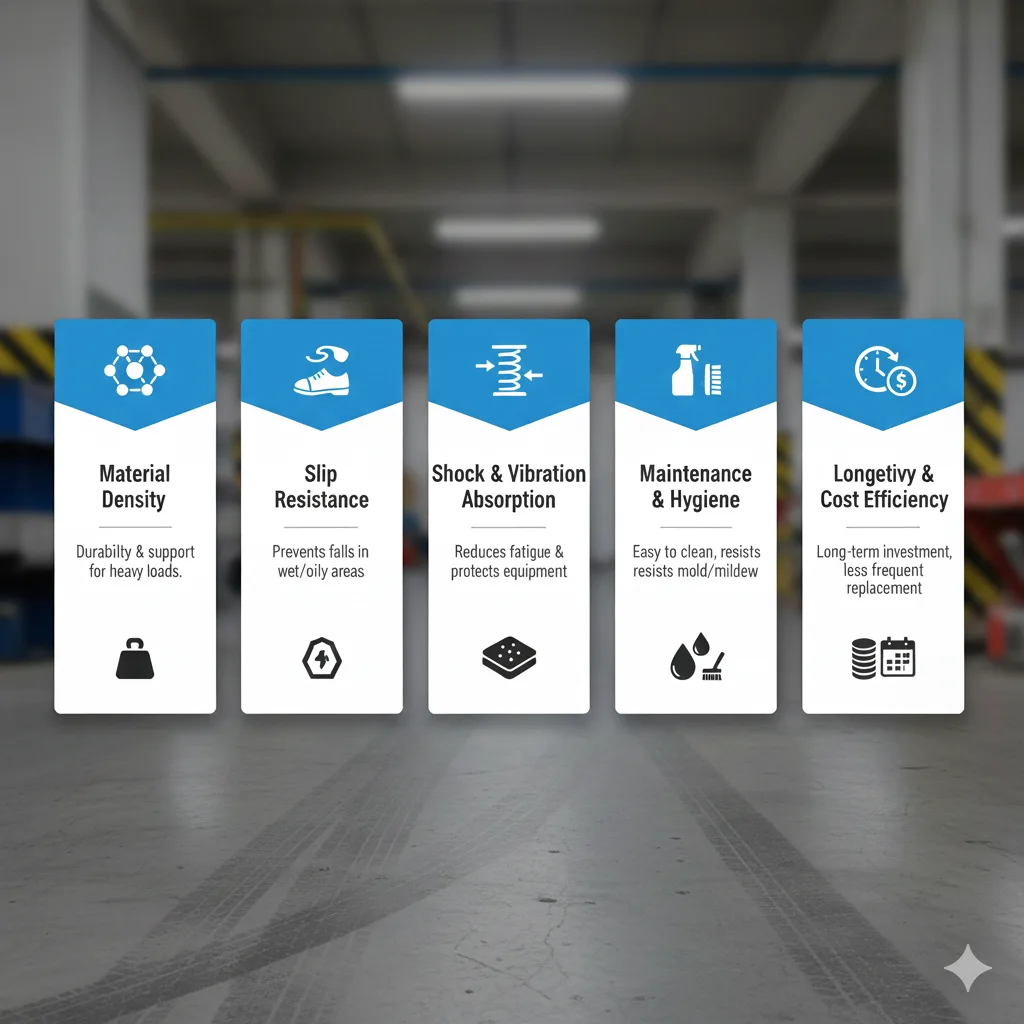
When choosing the right rubber mat, consider more than just thickness.
-
Material Density: Higher-density mats last longer and offer better load support, especially in industrial zones.
-
Slip Resistance: Whether used in barns, gyms, or factories, mats must prevent slipping. That’s where materials categorized under anti slip mat are beneficial.
-
Shock & Vibration Absorption: Mats for gyms or heavy industry must absorb impact efficiently to protect both equipment and flooring.
-
Maintenance & Hygiene: Rubber mats require minimal care, making them ideal for wet areas, barns, and wash bays where hygiene matters.
-
Longevity & Cost Efficiency: Investing in premium rubber floor mats or industrial rubber flooring reduces replacement costs and enhances safety.
Benefits of Choosing the Correct Rubber Mat Thickness
Selecting the right mat thickness can transform your gym, barn, or industrial setup.
-
Improved Safety: The correct mat reduces risks from slipping, falling objects, or unstable footing.
-
Reduced Fatigue: Thicker mats serve as anti fatigue industrial mats, reducing muscle strain during long working hours.
-
Noise & Impact Reduction: Gyms and industrial units benefit from the shock absorption of thick rubber gym flooring.
-
Better Hygiene: Rubber mats resist moisture, bacteria, and odor ideal for barns and wash bays.
Common Mistakes to Avoid When Choosing Rubber Mat Thickness
-
Choosing Thin Mats for Heavy Loads: Thin mats under heavy equipment lead to cracks, reduced grip, and subfloor damage.
-
Ignoring Subfloor Condition: Concrete floors may require thicker mats for impact reduction.
-
Not Considering Long-Term Use: Cheaper, thin mats result in frequent replacements. Upgrading to proper rubber mat thickness saves money in the long run.
Why Rubbmat’s Rubber Mats Are the Perfect Choice
Rubbmat is known for manufacturing high-quality rubber mats built for long-term performance. Whether you need durable gym floor mats, premium horse stall rubber mats, strong rubber gym flooring, or dependable industrial rubber flooring, Rubbmat offers products designed with precision. Their mats provide excellent resilience, superior comfort, and a wide range of thickness options tailored for different applications.
FAQs
1. Is thicker always better for rubber gym flooring?
Not necessarily. Thicker mats are ideal for heavy weights, but for basic workouts, 6–10mm is enough.
2. Can rubber mats be used outdoors?
Yes, high-quality rubber floor mats handle weather conditions, moisture, and heavy use.
3. How long does a rubber mat last?
With proper thickness and material quality, rubber mats can last several years even under heavy use.
4. Are rubber mats easy to clean?
Yes, they resist moisture and dirt, making cleaning simple and fast.
5. Which mats are best for horse barns?
Horse stall rubber mats between 12mm–17mm provide stability and cushioned comfort.
Conclusion
Selecting the correct rubber mat thickness depends on your environment, usage intensity, and the type of load being placed on the floor. Gyms require shock-absorbent thickness, barns need cushioned stability, and industries depend on durability and anti-fatigue features. By choosing the right thickness for rubber gym flooring, horse stall rubber mats, or industrial rubber flooring, you ensure safety, performance, and long-term cost savings.