Wet manure, water, and constant hoof traffic can make dairy alleys difficult to manage. Concrete is strong, but worn or polished areas may become slick. Very rough concrete can also increase hoof wear.
Cow walkway mats add a resilient surface in places where cows walk, turn, and wait. A suitable system can support traction, cushioning, and more confident movement. However, rubber flooring is not a complete fix on its own. Good results still depend on drainage, secure installation, routine cleaning, hoof care, and sensible facility design.
This guide explains how to compare materials, surface patterns, fastening systems, maintenance needs, and long-term value.
Why High-Traffic Dairy Floors Need Better Traction
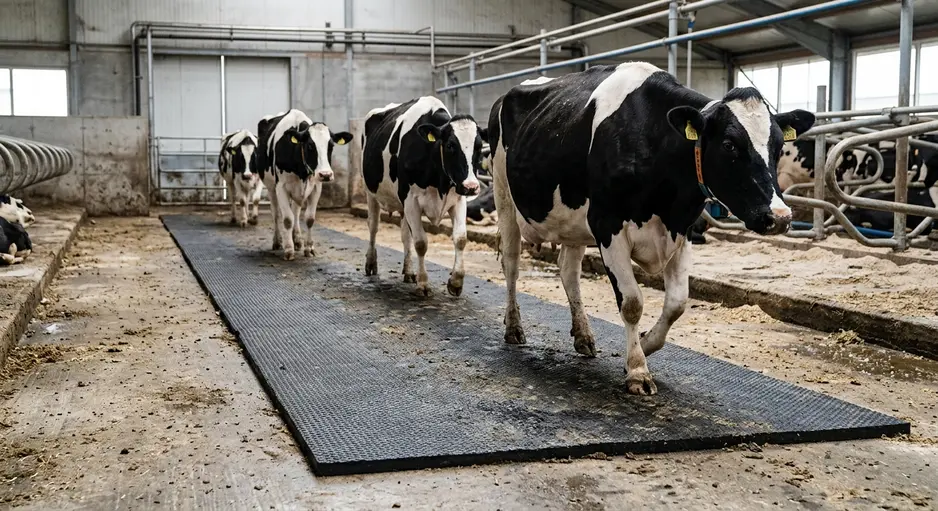
Dairy floors face a demanding mix of moisture, manure, repeated hoof impact, and cleaning equipment. Traffic may also polish concrete over time. The result can be a floor that performs differently when wet than it does during a dry inspection.
Where slips and floor wear happen most
Risk is rarely equal across the whole facility. High-wear areas often combine heavy traffic with turning, crowding, braking, or standing moisture.
- Milking-parlor entrances and exits
- Holding pens and return lanes
- Feed alleys and crossovers
- Approaches to water troughs
- Sharp turns and narrow passages
- Transitions between concrete and rubber
These locations should be assessed first when planning cow barn walkway mats. A phased project can target problem zones before flooring is added throughout the barn.
How wet concrete affects cow hoof traction
Water, urine, and manure can form a slick layer over concrete. Worn aggregate may further reduce cow hoof traction. Yet making concrete extremely rough is not always the answer. An abrasive surface can increase sole wear, especially where cows walk long distances.
Flooring should therefore be judged in real operating conditions. A surface that feels secure when clean and dry may perform very differently after manure accumulates.
What are the signs that a dairy walkway is unsafe?
Watch for cows taking short steps, slowing before transitions, slipping on turns, or refusing to enter a lane. Pooling water, polished concrete, and frequent hoof-wear concerns also deserve attention.
Gait changes can have several causes. Ask a veterinarian or qualified hoof-care professional to assess ongoing locomotion problems rather than assuming the floor is the only factor.
How Cow Walkway Mats Support Hoof Comfort
Anti-slip rubber surfaces and wet floor traction
An anti-slip rubber surface uses texture, ribs, or grooves to create contact under the hoof. The profile should provide useful wet floor traction without creating pockets that are difficult to clean.
No floor should be treated as completely “non-slip.” Manure can cover any traction pattern. Grooves must stay open, and cleaning should occur often enough to expose the working surface.
Shock-absorbing flooring under repeated impact
Rubber is more resilient than bare concrete. This shock-absorbing flooring can soften repeated contact as cows move to and from the parlor. It may also encourage more confident movement where cows previously hesitated.
These benefits should not be presented as a cure for lameness. Hoof health also depends on trimming, nutrition, hygiene, lying time, stall design, infection control, and veterinary care.
Are rubber mats better than grooved concrete?
Neither option is best for every barn. Compare them across the factors that matter in your facility:
- Cushioning: Rubber is resilient, while grooved concrete remains hard.
- Initial cost: Rubber flooring usually costs more at the start.
- Traction: Rubber depends on its surface and cleanliness. Concrete depends on groove depth, spacing, and wear.
- Repair: Individual interlocking rubber mats may be replaceable. Concrete repairs can disrupt traffic.
- Maintenance: Rubber needs secure edges and inspections. Concrete may require re-grooving or resurfacing.
The right choice depends on cow traffic, drainage, cleaning equipment, base condition, and barn layout.
How to Choose Heavy-Duty Cow Walkway Mats
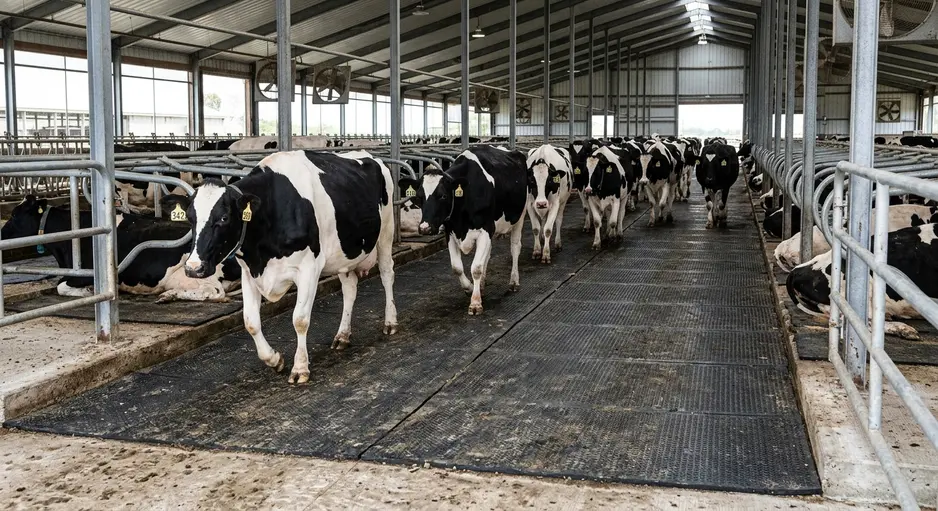
Match the flooring to traffic and equipment
Begin with a clear description of how the area is used. Cow-only passages place different demands on flooring than alleys used by tractors or skid-steer loaders. Turning points also face greater sideways force than straight lanes.
Confirm whether the dairy floor mats are suitable for automatic scrapers, flushing systems, outdoor temperatures, and vehicle loads. Not every product intended for livestock is rated for machinery.
Look for durable, moisture-resistant rubber
Heavy-duty cow walkway mats should use a dense rubber compound suited to repeated hoof impact. Review moisture absorption, expected temperature range, wear resistance, and performance in manure-exposed conditions.
Ask for written technical data and warranty terms. Do not assume a material is chemical-proof. Cleaning agents, disinfectants, oils, and prolonged exposure may affect different compounds in different ways.
Evaluate drainage grooves and manure removal
Drainage can take place across the top surface, beneath the mats, or through both routes. Groove direction should work with the existing floor slope instead of trapping liquid.
Very deep patterns may collect manure if cleaning equipment cannot reach them. Check whether the design works with flushing, scraping, and current drains. Rubber walkway mats for cows should not block a drainage system that already functions well.
Interlocking mats or fixed sheets?
Interlocking rubber mats can simplify targeted installation and replacement. Large sheets or rolls create fewer seams but may be harder to handle. Fastened systems can offer more stability in high-force areas, while custom-cut sections may suit irregular passages.
The best format depends on mat movement, seam exposure, turning forces, and the shape of the floor. Open edges need a secure transition in every system.
Buyer checklist for dairy cattle mats
- Verified dimensions and thickness
- Surface profile and drainage design
- Load rating and intended use
- Required condition of the base floor
- Fastening or interlocking method
- Edge and transition details
- Scraper and machinery compatibility
- Cleaning limits and instructions
- Warranty and replacement support
Buyers can review available dairy flooring options from Rubbmat and request current technical specifications. Share alley dimensions, traffic patterns, cleaning methods, and equipment details before selecting a product.
Installation Best Practices for Cow Alley Mats
Can cow walkway mats be installed over concrete?
Generally, yes. The concrete should be structurally sound, reasonably level, clean, and able to drain correctly. Major holes, loose sections, and severe level changes must be repaired first. Product-specific installation instructions always take priority.
Prepare the base before installation
- Repair major cracks, holes, and unstable concrete.
- Remove compacted manure, oil, and loose debris.
- Check the floor slope and clear all drains.
- Measure passages, gates, curbs, and obstacles.
- Allow the rubber to acclimate when required.
- Keep seams away from high-torque turns where possible.
Prevent gaps, curling, and trip hazards
Use the anchors or joining system specified for the product. Secure exposed edges and create smooth transitions to concrete. Avoid narrow cut strips that could shift, lift, or fold.
Rubber may expand or contract as temperatures change. Follow the supplier’s spacing guidance. Inspect fitting around drains, gate posts, scraper routes, and curbs before reopening the passage.
Useful measures include slip frequency, cow-flow time, mat movement, cleaning time, edge wear, and employee observations. This creates farm-specific evidence without promising a set result.
Cleaning and Maintaining Dairy Farm Rubber Mats
Keep the traction profile free of buildup
Scrape or flush often enough to prevent manure from covering the surface pattern. Deal with standing water promptly and keep drainage grooves clear. A manure-resistant surface still needs regular cleaning.
Follow the supplier’s pressure-washing limits for water temperature, pressure, nozzle distance, and chemicals. An aggressive nozzle can damage edges or force water beneath loose sections.
Inspect high-wear areas on a schedule
- Check for loose anchors and open seams.
- Look for raised or curled edges.
- Record cuts, gouges, and worn traction patterns.
- Clear blocked drains and drainage channels.
- Check for movement near turns and gates.
- Inspect damage from scraper blades or vehicles.
How often should cattle walkway mats be cleaned?
There is no single schedule for every farm. Frequency depends on stocking density, manure load, floor slope, weather exposure, and the cleaning system. The goal is simple: clean before buildup hides the traction profile.
Maintain a cleaning and inspection log as part of farm hygiene flooring records. Note the date, problem area, action taken, and person responsible. This makes repeated issues easier to find.
Cost, Durability, and Return on Investment
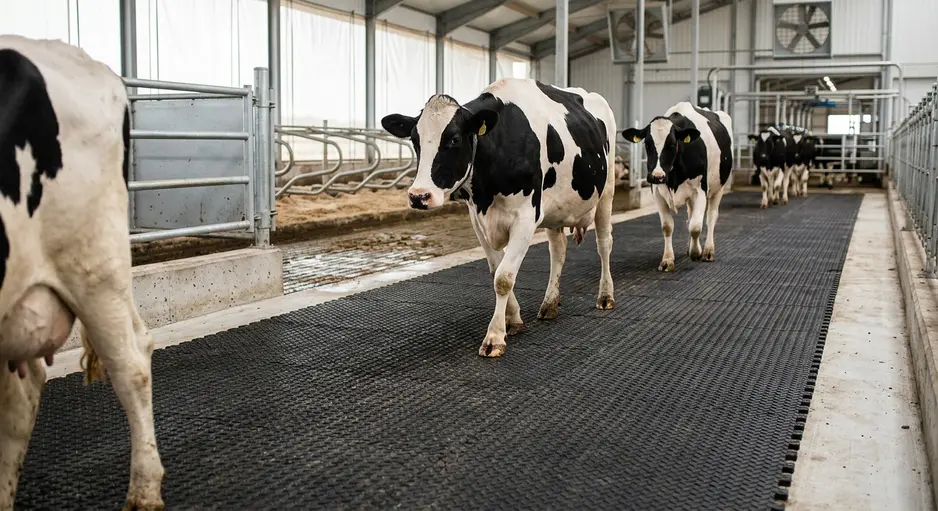
What affects the price?
Pricing varies with rubber composition, thickness, dimensions, surface design, fastening features, freight, and installation. Custom cutting, machinery ratings, warranty coverage, and replacement support may also affect the total cost.
Compare complete installed systems rather than looking only at the price of each mat. Base repairs, transitions, anchors, labor, and delivery all belong in the budget.
How long do cow walkway rubber mats last?
Service life depends on cow traffic, turning and braking forces, scraper contact, vehicle loads, chemicals, installation quality, and rubber formulation. Maintenance also plays a major role.
Ask for written use limits instead of relying on a broad lifespan estimate. A warranty may not cover use with machinery or cleaning equipment that falls outside the product specification.
A practical ROI calculation
Track purchase, installation, maintenance, and replacement costs. Then record slip events, cleaning labor, cow-flow interruptions, and concrete repairs in the same zones.
Installing rubber flooring for dairy farms in the highest-risk areas first can limit initial spending. It also gives the farm time to assess durability and daily performance before expanding the project.
Cow Walkway Mats for Heavy-Traffic Dairy Floors
Build a Safer, More Durable Dairy Walkway
Effective cow walkway flooring brings together traction, cushioning, drainage, secure installation, and regular cleaning. Assess the highest-risk zones before buying, and compare verified specifications rather than choosing by thickness or price alone.
Explore cow walkway mats from Rubbmat or contact the team with your passage dimensions, traffic conditions, cleaning method, and equipment requirements. These details can help identify a suitable option for demanding dairy floors.
Frequently Asked Questions About Cow Walkway Mats
1. Are rubber walkway mats safe for dairy cows?
They can support livestock walkway safety when they provide adequate wet traction, stay securely installed, and receive regular cleaning. Loose, damaged, or manure-covered mats may create new hazards.
2. Do cow walkway mats prevent lameness?
No flooring can guarantee lameness prevention. Rubber may support traction and hoof comfort, but hoof health is affected by many factors, including nutrition, trimming, hygiene, lying time, infections, and stall design.
3. What thickness is best for dairy cow walkway mats?
There is no universal best thickness. Consider rubber density, load rating, traffic, base condition, fastening method, and verified manufacturer specifications. Thickness alone does not prove durability.
4. Can rubber mats be used with automatic alley scrapers?
Only when the mats, anchors, seams, and scraper are designed to work together. Confirm compatibility with both suppliers before installation.
5. Do drainage grooves make flooring less slippery?
Grooves can help move moisture and preserve grip. They must follow the correct direction and remain clear. Packed manure can cancel much of their benefit.