Water, cooking oil, soap, and food debris can turn a busy kitchen floor into a serious safety risk. Employees also spend hours standing on hard tile or concrete. Ordinary household mats are rarely made to handle these demanding conditions.
The best anti-slip rubber mats for commercial kitchen use combine reliable traction, grease resistance, drainage, comfort, and easy cleaning. They should remain stable during fast-paced work without blocking doors, drains, carts, or walkways.
Mats support a safer workplace, but they do not replace spill cleanup, staff training, floor maintenance, or slip-resistant footwear. This guide explains the main mat materials, the best options for each work area, and what to ask a supplier before ordering.
Why Commercial Kitchens Need Anti-Slip Rubber Mats
Wet and Greasy Floors Increase Slip Risks
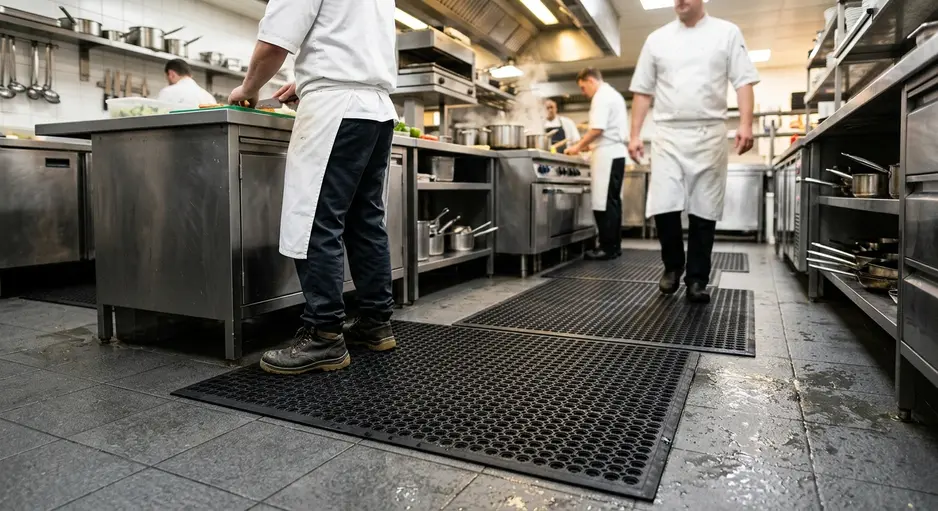
Commercial kitchens face several floor contaminants at once. Water may collect near sinks and dishwashers, while grease spreads around grills and fryers. Soap, sauces, ice, and food scraps can reduce traction even further.
High-risk locations often include fry lines, dish pits, beverage stations, prep sinks, and entrances to walk-in coolers. Properly selected commercial kitchen mats can provide a more stable standing surface in these areas.
Safety Mats Offer Several Operational Benefits
- They improve traction on wet or greasy floors.
- They provide cushioning for employees who stand for long shifts.
- They help protect floors from dropped cookware and utensils.
- They reduce direct wear on tile, concrete, or resin flooring.
- They create clear standing zones around workstations.
Which Rubber Mat Material Is Best for a Kitchen?
Nitrile Rubber
Nitrile-rich rubber is often the preferred choice for fry lines, grills, and other greasy areas. It generally resists animal fats, vegetable oils, and petroleum-based substances better than standard natural rubber.
Natural Rubber
Natural rubber is flexible, resilient, and suitable for many general wet areas. However, some formulations may swell, soften, or deteriorate after repeated grease exposure.
Recycled and Blended Rubber Compounds
Recycled rubber can be a durable and cost-effective option for dry or moderate-use work zones. Performance varies with the formulation, so buyers should confirm chemical resistance, temperature limits, and cleaning instructions.
Drainage and Anti-Fatigue Construction
Drainage holes, raised cleats, and underside channels allow liquid to move away from the walking surface. Firm anti fatigue kitchen mats may also ease discomfort during long shifts.
Best Commercial Kitchen Mats by Work Area
Best Overall: Heavy-Duty Nitrile Drainage Mats
For mixed wet and greasy conditions, a heavy-duty nitrile drainage mat is often the strongest all-around option. Look for a textured top, large drainage openings, raised underside cleats, stable weight, and molded beveled edges.
Best for Dishwashing Areas: Open Drainage Mats
Dish pits need fast drainage and good underside airflow. Large holes allow water and food scraps to pass through without leaving as much debris on the standing surface.
Best for Prep Stations: Ergonomic Standing Mats
Moderately cushioned mats suit employees who remain at cutting and prep counters for long periods. A solid top may work in a relatively dry station, while a perforated design is better where frequent spills occur.
Best for Bars and Beverage Stations
Bar mats should provide drainage, cushioning for dropped glassware, and an easy-clean surface. Interlocking kitchen rubber mats can cover unusual layouts, but every connection should remain flat and secure.
Best for Walk-In Coolers and Freezers
Cold areas require a compound that remains flexible at the expected operating temperature. Ask whether the rubber may harden, crack, shrink, or curl in low-temperature conditions.
Best for Large Restaurants and Hotels
Modular systems make it easier to replace damaged sections without changing an entire floor layout. Buyers ordering bulk kitchen mats for restaurants and hotels may also benefit from standard sizes, numbered layouts, spare modules, and consistent specifications across locations.
How Do You Choose an Anti-Slip Kitchen Mat?

Match the Mat to the Main Contaminant
- Water only: Choose a general-purpose drainage mat.
- Water and detergent: Verify chemical compatibility and drainage capacity.
- Cooking oil and grease: Select nitrile or documented grease-resistant rubber mats.
- Food debris: Use large drainage holes and easy-lift construction.
- Long standing periods: Choose firm ergonomic support.
- Cart traffic: Prioritize a low profile, stable edges, and smooth transitions.
Check the Surface, Drainage, and Backing
Assess hole size, surface texture, raised cleats, underside drainage channels, and grip under realistic wet conditions. A mat should have enough weight and floor contact to resist movement.
What Thickness Is Best for a Commercial Kitchen Mat?
Thicker is not always better. The right thickness must balance cushioning, drainage, stability, door clearance, and cart access. A very thick mat can create a raised transition, while a thin mat may offer limited support.
Commercial Kitchen Mat Buying Checklist
- Rubber compound and grease compatibility
- Exact length, width, thickness, and weight
- Drainage-hole size and underside airflow
- Wet-surface texture and backing stability
- Beveled edges or compatible edge ramps
- Temperature and chemical limits
- Cleaning and drying instructions
- Custom sizing and replacement availability
Installation and Cleaning Best Practices
How Should Commercial Kitchen Mats Be Installed?
- Measure the standing zone and nearby walking path.
- Clean and fully degrease the floor beneath the mat.
- Allow the underlying floor to dry.
- Lay each mat flat without overlapping edges.
- Keep doors, floor drains, and emergency routes clear.
- Test for sliding, rocking, curling, and loose connections.
- Check placement and condition at the start of each shift.
How Do You Clean Kitchen Rubber Mats?
Remove loose debris, then lift the mats instead of cleaning only around them. Wash both sides with a manufacturer-approved detergent. Degrease and rinse the floor below before placing the mats back.
When Should Kitchen Mats Be Replaced?
- Edges are cracked, torn, or curled.
- Drainage holes have split or stretched.
- The rubber has become hard or brittle.
- The mat has permanent dents or waves.
- The walking surface has lost its texture.
- Odor remains after correct cleaning and drying.
- The mat keeps sliding after the floor and backing are cleaned.
Real-World Selection Examples
A Busy Restaurant Fry Line
The main concerns are grease splashes, heat, and long standing periods. A heavy-duty nitrile drainage mat with a textured surface and beveled edges is a practical choice.
A Hotel Dishwashing Station
Constant water, detergent, and food residue call for high-drainage mats in removable sections. Staff should lift each section on a set schedule, clean both sides, and wash the floor underneath.
A Multi-Location Food-Service Buyer
Standard material specifications, custom dimensions, numbered layouts, and spare modules can simplify purchasing.
How to Evaluate a Commercial Mat Supplier

Questions to Ask a Rubber Mat Manufacturer
- Which rubber compound is used?
- Is it compatible with animal fat, vegetable oil, detergent, and sanitizer?
- What are the exact dimensions, thickness, weight, and temperature limits?
- Are beveled edges included or available separately?
- Can custom rubber mat sizes be produced?
- Are product data, samples, and care instructions available?
- What are the warranty, minimum order quantity, and production lead time?
Buying Wholesale Anti-Slip Rubber Mats
Bulk buyers should compare batch consistency, volume options, pallet quantities, packaging, replacement parts, and freight planning. Custom colors, private labeling, connectors, and export documents may also matter for distributors and hospitality groups.
Buy Best Anti-Slip Rubber Mats
Choose the Right Mat for Each Kitchen Hazard
The best mat is selected for a specific risk, not simply by price, softness, or thickness. Review grease exposure, standing time, drainage, cleaning routines, floor condition, and traffic before ordering.
For safer results, combine quality anti-slip rubber mats with prompt spill response, clean drains, suitable footwear, and routine inspections. Buyers planning custom or bulk orders can contact Rubbmat to discuss heavy-duty kitchen mats, sizing needs, wholesale quantities, and commercial export requirements.
Frequently Asked Questions About Kitchen Mats
1. What are the best anti-slip rubber mats for commercial kitchens?
The strongest option depends on the work area. Look for a grease-compatible compound, effective drainage, wet-surface texture, stable backing, beveled edges, commercial durability, and easy cleaning. Nitrile drainage mats are often preferred for busy wet and greasy cooklines.
2. Are rubber mats safe for commercial kitchens?
Properly selected and maintained mats can improve traction and standing comfort. Poorly maintained products may trap debris, slide, curl, or create raised edges. Daily inspection and regular cleaning are essential.
3. Are drainage holes better than a solid surface?
Drainage holes usually work better in consistently wet areas. Solid ergonomic mats may suit dry prep or service stations. Base the choice on spill volume, food debris, cleaning practices, and employee movement.
4. Is nitrile rubber resistant to kitchen grease?
Nitrile generally resists oil and grease better than many natural rubber formulations. Performance still varies by compound, so request compatibility information for the specific fats, cleaners, and temperatures in your kitchen.
5. Can rubber mats create a sanitation or trip hazard?
Yes. Trapped food, dirty undersides, overlapping sections, curled corners, and unstable connectors can create hazards. Correct sizing, scheduled lifting, secure edges, and timely replacement help prevent these problems.