Safe pool areas need more than an attractive finish. Hotels, resorts, clubs, schools, and public pools in Peru need flooring that handles water, chemicals, sun, and heavy foot traffic. When choosing a pool rubber mat exporter to Peru, buyers should review wet traction, drainage, durability, customization, and shipping support before ordering.
Why Do Pools in Peru Need Safety Rubber Mats?
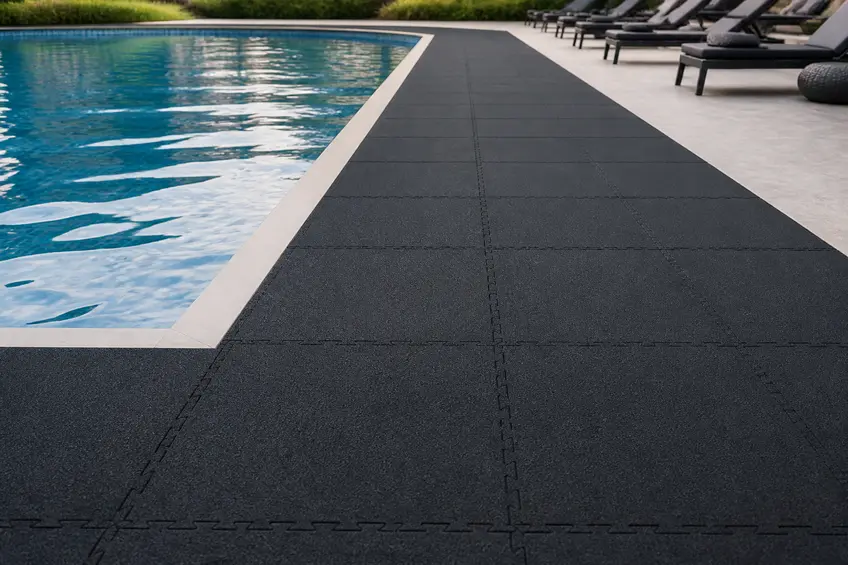
Reducing slips in barefoot wet areas
Pool decks often collect splashed water, sunscreen, body oils, dust, and cleaning residue. These substances can make smooth surfaces harder to walk on. Textured swimming pool safety mats can improve grip and create a more stable walking surface in these wet areas.
Raised ribs, studs, and patterned surfaces are common features of anti slip pool mats. However, no flooring should be called fully slip-proof. Pool operators must combine suitable flooring with regular cleaning, good drainage, warning signs, and proper staff procedures.
Improving drainage around busy pools
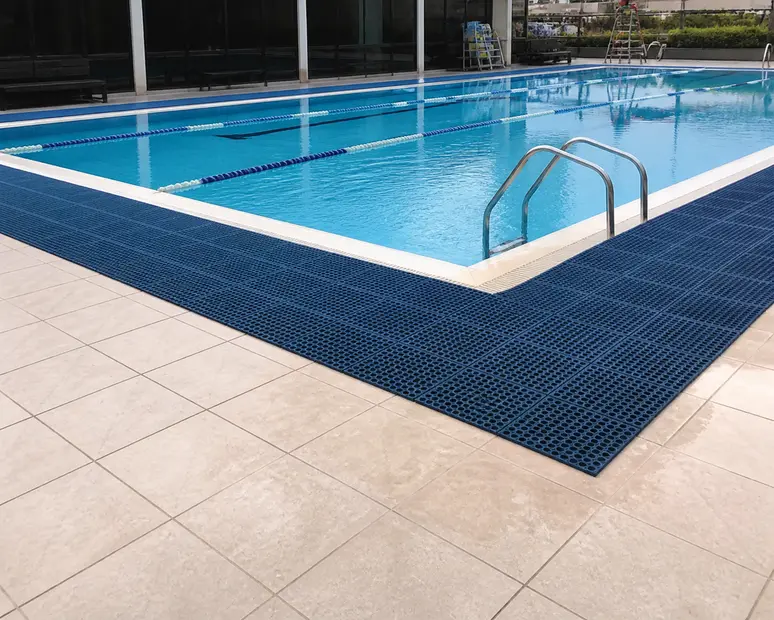
Open-grid drainage rubber mats allow water to move through the surface instead of staying under users’ feet. This design can reduce puddles, improve airflow, and help the deck dry faster. It is useful near pool edges, showers, spas, and changing rooms.
Mats cannot correct a poorly designed deck. The surface below them still needs the right slope and working drainage channels. Buyers should inspect drains before installing any anti skid pool flooring.
Supporting different commercial facilities
Pool mats can be used in many wet and recreational areas, including:
- Hotels and resort pool decks
- Schools and municipal swimming facilities
- Sports clubs and training centers
- Water parks and children’s splash zones
- Spas, saunas, showers, and locker rooms
- Changing areas and outdoor walkways
Peru has varied weather conditions. Coastal sun, humid regions, and changing temperatures may affect the mat differently. An outdoor rubber mat supplier should help buyers select products for the actual site rather than offer one option for every location.
What Makes a High-Quality Pool Rubber Mat?
Wet slip resistance and surface texture
A quality pool rubber mat needs a texture that supports barefoot traction without causing discomfort. Ribs and raised patterns can improve contact, while open-grid designs help water leave the walking surface.
Buyers should request wet barefoot test results based on a recognized method, such as EN 16165 or DIN 51097, when available. A basic “anti-slip” label does not explain how the product was tested or whether it suits a commercial pool.
Chlorine, water, and UV resistance
Pool chemicals and outdoor exposure can change rubber over time. Poor material may swell, crack, fade, become brittle, or develop a hard surface. The right formulation should be selected for regular contact with treated water and cleaning products.
For an outdoor project, ask about:
- Resistance to diluted chlorine solutions
- Performance after repeated wet and dry cycles
- UV stability for exposed pool decks
- Color change after weather exposure
- Resistance to cracking and surface hardening
- Recommended cleaning chemicals and dilution levels
The term “waterproof rubber mats” is often used in product searches. In practice, water-resistant pool mats is usually a more accurate description because performance also depends on seams, holes, edges, and installation.
Drainage and hygienic construction
A pool mat should be easy to lift, rinse, and dry. Drainage holes must be large enough to move water but shaped to support comfortable walking. The underside should allow airflow and make it practical for staff to remove trapped dirt.
Edges also matter. Curled or raised edges may create trip points. For modular flooring, connectors should remain secure during cleaning and regular foot traffic.
Rubber mat durability features
Thickness alone does not show how long rubber pool flooring will last. Material composition and test data offer better guidance. A buyer can ask a pool rubber mat manufacturer for information on:
- Tensile and tear strength
- Hardness and flexibility
- Abrasion resistance
- Heat and accelerated aging
- UV-weathering performance
- Dimensional stability
ASTM test methods such as D412, D624, D2240, D573, and G154 may be used to assess these properties. Buyers should check which tests apply to the offered product and request current reports where needed.
Which Pool Mat Type Is Best for Commercial Facilities?
Open-grid mats for splash zones
Open-grid mats are a practical choice where water exposure is frequent. Their perforated surface lets water pass through and can support faster drying. They are often considered for pool surrounds, showers, changing areas, and spa entrances.
Solid rubber pool flooring
Solid flooring provides continuous coverage and may offer more cushioning. It requires careful planning because water cannot pass through the surface. Deck slope, seams, and drain access must be checked before installation.
Solid options may come as rolls, tiles, or separate mats. They can work in areas where comfort and continuous coverage are more important than rapid through-surface drainage.
Modular tiles or rolled mats?
- Modular tiles: Fit flexible layouts and allow individual damaged pieces to be replaced.
- Rolled mats: Cover long, straight areas with fewer joints but may take more shipping space.
- Interlocking sections: Help create custom layouts around corners and fixed equipment.
- Loose mats: Work for limited zones but must remain flat and stable.
Shock-absorbing pool mats for family areas
Cushioned wet area flooring solutions may improve comfort near family pools and children’s splash zones. Yet soft flooring does not remove the need for supervision, lifeguard procedures, or safe behavior. Comfort and safety management must work together.
How Do You Evaluate a Pool Mat Exporter to Peru?
Verify quality-control capabilities
A reliable supplier should answer technical questions clearly. Before comparing quotations, ask each company to provide the same set of details. This makes it easier to compare product quality rather than unit cost alone.
Your supplier checklist should cover:
- Product specifications and material information
- Available wet slip-resistance results
- UV, aging, and chemical-resistance information
- Dimensions, thickness, weight, and tolerances
- Batch inspection and defect-control procedures
- Packaging method and carton details
- Replacement or defect policy
Request samples before a bulk order
A sample gives the buyer a chance to examine the mat under real site conditions. Test it in a controlled wet area and monitor its behavior over several cleaning cycles.
Check the sample for:
- Barefoot comfort and wet traction
- Drainage speed and drying time
- Rubber odor in warm conditions
- Edge lifting, curling, or movement
- Color and surface consistency
- Cleaning effort and residue buildup
- Fit with the existing pool deck
Compare MOQ, capacity, and lead time
A wholesale pool rubber mats supplier should confirm the minimum order quantity, sample time, production schedule, and packing method. Customized colors, molds, logos, or dimensions may require a larger order and more production time.
Ask how the supplier handles repeat batches. Hotels and commercial facilities may need matching replacement tiles later. Color and size consistency can be important when only one section needs repair.
Confirm export communication
Export reliability includes accurate documents, clear shipping terms, and timely updates. Before choosing a pool rubber mat exporter to Peru, review its response time and ability to provide packing data, shipment documents, and product labels.
Buyers can also ask whether Spanish-language labels, carton markings, or basic product instructions are available. All requirements should appear in the approved purchase order.
Why Source Pool Rubber Mats from India?
Flexible options for wholesale projects
Indian suppliers may offer bulk production, private labeling, custom packaging, and different mat designs. However, buyers should assess each supplier on its own records. Country of origin alone does not confirm quality.
Commercial buyers may request:
- Custom rubber pool mat sizes
- Selected thicknesses and colors
- Open-grid or textured surfaces
- Interlocking edges and border pieces
- Embossed logos or private labels
- Project-specific carton and pallet packing
Contact Rubbmat for project details
Peruvian importers can contact Rubbmat through its official website at rubbmat.com to request available specifications, samples, customization details, minimum order information, and an export quotation.
Buyers seeking the best pool rubber mat supplier from India should compare documented product performance, communication, sample quality, and total landed cost. Avoid selecting a supplier only because it offers the lowest initial quotation.
How Are Pool Rubber Mats Exported to Peru?
Confirm product classification
The customs classification can depend on material, design, and intended use. Before shipping, the importer should confirm the correct classification with a licensed customs broker in Peru. Do not assume that one code applies to every type of rubber mat.
Prepare essential shipping documents
Documents may vary based on the shipment and agreed trade terms. A typical file can include:
- Commercial invoice
- Packing list
- Bill of lading or air waybill
- Certificate of origin when requested
- Insurance certificate when applicable
- Product test reports requested by the buyer
- Pallet or packing declarations where required
Compare EXW, FOB, CIF, and DDP terms
The unit price is only one part of the purchase. Buyers should compare estimated landed cost, including inland transport, freight, insurance, duties, taxes, port charges, brokerage, and final delivery.
Each quotation should state the Incoterm and named location. This shows where the seller’s responsibility ends and where the buyer takes over.
Protect mats during bulk shipping
Bulk rubber pool mats for commercial pools should be packed to limit moisture, dirt, bending, and deformation. Cartons or rolls need clear product codes, quantities, dimensions, and lot numbers. Pallet size and total shipment weight should be confirmed before dispatch.
Pool Mat Installation and Maintenance Checklist
Inspect the deck first
- Repair cracks and uneven areas.
- Remove algae, oil, and chemical residue.
- Clear all drainage channels.
- Check doors, walkways, and accessible routes.
- Dry-fit modular sections before full placement.
Prevent movement and curled edges
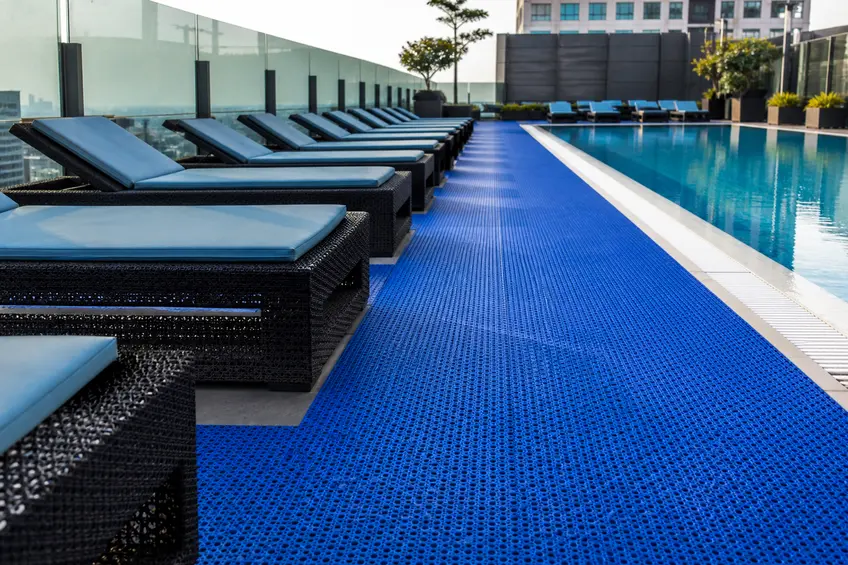
Install the mats according to the supplied instructions. Use compatible connectors, ramps, and edge pieces where specified. After installation, inspect the area under wet foot traffic and correct any movement or raised edges.
Keep pool safety flooring clean
- Rinse away chemicals and loose debris.
- Lift sections to clean underneath.
- Use approved cleaning products.
- Allow the deck and mats to dry.
- Inspect connectors, edges, and surface texture.
- Replace damaged sections without delay.
How can I order wholesale pool mats for Peru?
- Share site dimensions and usage conditions.
- Request samples and technical information.
- Confirm quantity and custom features.
- Compare trade terms and landed cost.
- Approve the final sample and packing details.
- Arrange freight and customs clearance.
Best Quality Pool Rubber Mat Exporter to Peru
Choose Pool Mats with Confidence
Selecting an international pool mat supplier requires more than comparing product photos. Review wet traction, drainage, material durability, customization, sample performance, packaging, and total landed cost.
For a commercial project in Peru, contact Rubbmat to request available pool mat specifications, samples, custom-size options, MOQ details, and an export quotation. Careful testing before a bulk order can help you choose safer, easier-to-maintain rubber pool flooring for your facility.
Frequently Asked Questions
1. What is the best rubber mat for a swimming pool?
The best option has suitable wet traction, drainage, chemical resistance, UV stability, and easy maintenance. Open-grid mats often suit splash zones, while solid mats may suit areas where cushioning matters. The right choice depends on whether the site is indoors, outdoors, permanent, or temporary.
2. Are rubber pool mats safe when wet?
Textured mats can improve traction when correctly selected and maintained. Buyers should request wet slip-test information. Mats must also remain flat, stable, clean, and well drained. No mat can remove every risk associated with a wet pool deck.
3. Are swimming pool mats resistant to chlorine?
Resistance depends on the rubber formulation, chemical concentration, contact time, and cleaning routine. Ask for chemical-resistance guidance and follow the recommended dilution and rinsing process. Strong chemicals should not be left on the surface longer than necessary.
4. Can swimming pool mats be used outdoors?
Yes, if they are designed as UV resistant outdoor mats and can handle local weather conditions. Indoor products should not be assumed suitable for direct sun, rain, or temperature changes. Request weathering information before choosing outdoor recreational flooring solutions.
5. Can pool mats be customized for hotels and resorts?
Possible options may include size, thickness, color, drainage pattern, texture, edge shape, logo, and packaging. Custom durable swimming pool mats for resorts and hotels may require higher order quantities, tooling, or added production time.