Industrial sites in Peru need flooring that can handle demanding work. Manufacturing plants, warehouses, workshops, food-processing facilities, and mining-support operations often face water, oil, heavy traffic, and long standing hours.
The right industrial rubber mat can improve traction, protect the floor, support worker comfort, and make cleaning easier. Yet buyers should not choose a mat by price or thickness alone. The rubber compound, surface, load, fluids, and work area all matter.
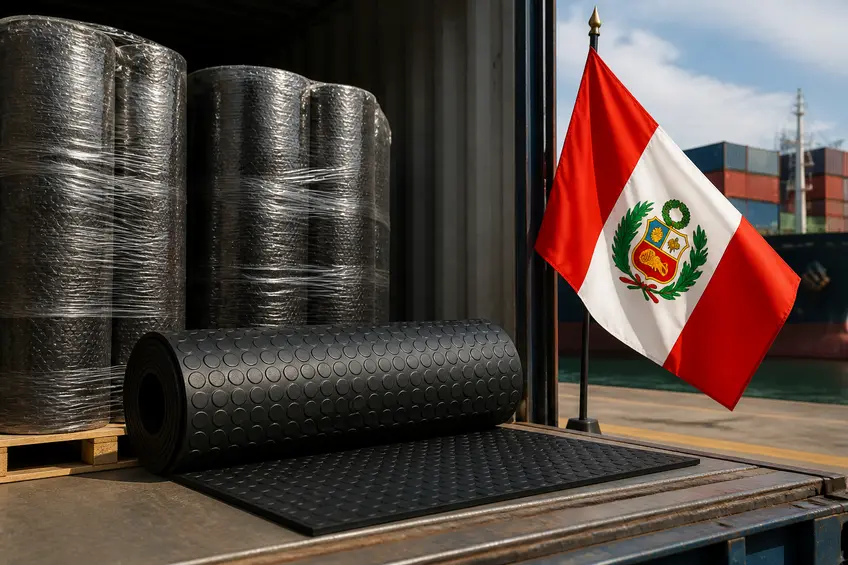
Rubbmat is a potential industrial rubber mat exporter to Peru for buyers seeking application-based options. This guide explains product types, key specifications, supplier checks, export steps, and maintenance practices.
Why Peru’s Industries Need Purpose-Built Rubber Mats
Common Workplace Flooring Risks
Industrial floors may become unsafe when water, grease, oil, dust, or production waste collects on the surface. Hard floors can also cause discomfort for employees who stand at fixed stations for long shifts.
Generic household mats are rarely designed for these conditions. They may curl, slide, swell, or wear out under carts and constant foot traffic. Purpose-built factory safety flooring is selected for the actual workplace hazard.
- Water and production fluids can reduce traction.
- Tools, carts, and equipment may damage the base floor.
- Standing work can increase leg and foot fatigue.
- Oil and chemicals may weaken unsuitable rubber compounds.
- Electrical areas require correctly rated insulation products.
Industrial and Commercial Flooring Applications
Rubber industrial mats can be used at assembly lines, packing stations, inspection tables, loading areas, machine stations, and warehouse entrances. They also suit automotive workshops, commercial kitchens, distribution centers, and selected food-production zones.
These products form part of wider industrial workplace safety solutions. The correct design depends on traffic, cleaning methods, environmental exposure, and whether workers, carts, or machines will use the area.
What Makes a High-Quality Industrial Rubber Mat?
Rubber Compound and Application Compatibility
Natural rubber and SBR blends are common choices for general factory and warehouse use. Nitrile, also called NBR, is often preferred for oil resistant rubber mats. EPDM is better suited to many outdoor areas because it resists weather and ozone exposure.
Special compounds may be available for selected chemical environments. However, no rubber is resistant to every substance. When sourcing chemical resistant rubber mats, provide the chemical name, concentration, temperature, contact time, and cleaning process. A supplier can then review compatibility before production.
Rubber Mat Durability Features
Thickness is useful, but it is only one part of performance. Buyers should compare the full technical specification before approving a bulk order.
- Rubber compound and material density
- Thickness, dimensions, and product weight
- Shore hardness and compression recovery
- Tensile, tear, and abrasion resistance
- Edge design and dimensional stability
- Surface texture and drainage capacity
- Indoor or outdoor service-temperature range
Where testing is required, buyers may ask about methods such as ASTM D2240 for hardness, ASTM D412 for tensile properties, ASTM D624 for tear strength, and ASTM D471 for the effect of liquids. A standard should only be claimed when valid test evidence is available.
Anti-Slip and Drainage Design
Raised textures can support traction in dry or lightly wet work areas. Perforated and open-grid mats allow fluids and small debris to move below the standing surface. This can be useful in washdown areas and damp production zones.
Beveled edges may reduce trip risks and help workers move on and off the mat. For anti slip industrial flooring, buyers should still consider cleaning, drainage, installation, and the type of footwear used.
Industrial Rubber Mats for Different Work Areas
Heavy-Duty Rubber Mats for Factory Floors
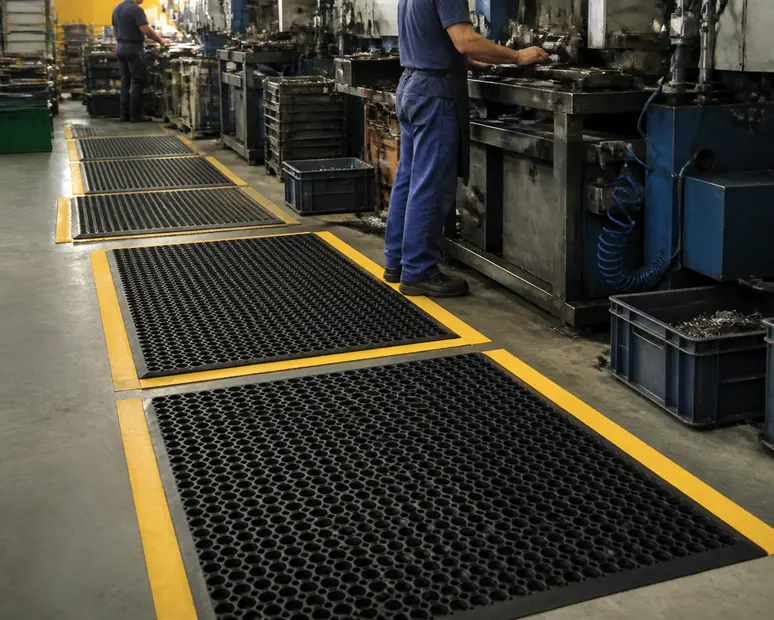
Heavy duty rubber mats are used in production lines, loading areas, equipment zones, and other high-use spaces. A mat designed for foot traffic may not be suitable for loaded carts, pallet equipment, or machinery.
Common formats include individual factory floor mats, interlocking tiles, modular sections, and rubber rolls. Interlocking products can cover larger areas and allow damaged sections to be replaced. Rolls may reduce the number of joints across long work zones.
For heavy traffic area mats, ask about abrasion resistance, movement under load, edge strength, and the suitability of the installation method.
Ergonomic Anti-Fatigue Mats
Anti fatigue rubber mats provide a stable, cushioned surface for employees who stand at assembly lines, inspection desks, checkout points, or packing stations. Good products balance cushioning with support. A mat that is too soft may feel unstable.
Look for recovery after compression, slip resistance, stable edges, and a surface that suits the work process. Ergonomic anti fatigue mats should be used with suitable footwear, sound workstation design, rest breaks, and job rotation. They should not be treated as a complete solution to every workplace injury.
Oil- and Chemical-Resistant Machine Area Mats
Nitrile mats are commonly considered for garages, maintenance bays, and production areas where oil or grease is present. Drainage holes may help keep fluids away from the main walking surface.
Machine area flooring mats still require a compatibility check. Fuels, solvents, acids, cleaning agents, and hot liquids affect rubber in different ways. Testing a sample under real operating conditions can reduce the risk of swelling, cracking, or surface damage.
Electrical Insulation Mats
Electrical insulation mats are used near switchboards, control panels, and electrical equipment. Selection must be based on the required voltage class, thickness, test method, and applicable regulations.
IEC 61111 or another buyer-specified standard may apply. Procurement teams should request valid test reports and confirm that the supplied grade matches the electrical application. A general-purpose rubber mat must never be treated as certified insulation matting.
How Do You Choose an Industrial Mat Supplier?
Verify Manufacturing and Quality Controls
A reliable industrial mat supplier should answer technical questions before asking for order approval. Request clear documents and samples instead of relying only on catalogue descriptions.
- Technical data sheet and stated rubber compound
- Dimensions, weight, and manufacturing tolerances
- Relevant laboratory or product test reports
- Batch or pre-shipment inspection procedures
- Sample terms and approval process
- Packaging, pallet, and labeling details
- Warranty terms and claim procedures
Look for Customization and Export Support
Projects may require custom rubber mat sizes, special thicknesses, surface patterns, colors, edge profiles, or branding. Ask whether each option needs new tooling or a minimum production quantity.
A wholesale industrial rubber mats supplier should also discuss palletization, private labeling, shipping documents, and product identification. These details matter when products will be distributed to several plants or resold in the Peru market.
Manufacturer, Trader, or Export Partner?
A direct rubber mat manufacturer may suit buyers who need product customization and factory-level technical discussions. A trader may provide a wider mix of product categories. An export partner may coordinate production, inspection, packing, and international transport.
When comparing the best industrial rubber mat supplier from India for a specific project, focus on proven product fit and clear documentation. Labels such as manufacturer or exporter do not replace technical due diligence.
Why Source Industrial Rubber Mats From India?
Product Range and Custom Manufacturing
Indian sourcing can give commercial buyers access to several rubber compounds, mat formats, dimensions, and surface designs. Depending on the supplier’s confirmed capabilities, orders may include bulk production, custom formats, product sampling, private labeling, or OEM requirements.
This flexibility can help factories, project contractors, and distributors seeking bulk rubber mats for manufacturing units. Every option should be confirmed through written specifications and an approved sample before full production begins.
Evaluating Rubbmat as an Export Partner
Peruvian importers can contact Rubbmat through its website to discuss industrial mat requirements. Rather than requesting a generic price, buyers should provide enough information for an application-based recommendation.
- Intended use and installation area
- Required length, width, and thickness
- Estimated order quantity
- Exposure to oil, water, heat, or chemicals
- Indoor or outdoor use
- Expected foot, cart, or equipment traffic
- Destination city or port in Peru
- Required testing or certification standard
Company history, factory details, certifications, export markets, and customer evidence should be assessed only through verified information supplied by Rubbmat. Buyers should request supporting records when these points affect vendor approval.
How Are Rubber Industrial Mats Exported to Peru?
From Product Inquiry to Approved Sample
- Share the application, operating conditions, and technical needs.
- Review the recommended rubber compound and product format.
- Compare the quotation, minimum quantity, and lead time.
- Request a physical or production sample where practical.
- Approve the dimensions, color, texture, edges, and packaging.
- Confirm production, inspection, and shipment terms.
Samples are especially useful when odor, edge curling, drainage, grip, or oil exposure is a concern. A short workplace trial may reveal issues that are not clear from a specification sheet.
Shipping, Incoterms, and Documents
Common quotation terms include EXW, FOB, CFR, and CIF. Sea freight usually suits wholesale orders, while courier or air freight may be practical for samples and urgent small shipments.
Typical documentation may include:
- Commercial invoice
- Packing list
- Bill of lading or airway bill
- Certificate of origin, when applicable
- Requested test or inspection reports
- Accurate product and package descriptions
Customs Classification in Peru
Some vulcanized rubber floor coverings may fall under HS heading 4016.91. However, the exact classification depends on product design, composition, and intended use.
Importers should confirm the current tariff code, taxes, duties, and restrictions with their licensed customs professional and the relevant Peruvian systems. Spanish descriptions such as tapetes de caucho industrial, pisos de caucho para fabricas, or tapetes antifatiga may help make documentation clearer.
Expert Tips for Better Performance and Lower Cost

Match the Mat to the Actual Hazard
- Oil or grease: Select nitrile or another verified oil-resistant compound.
- Wet washdown area: Consider a perforated drainage design.
- Long standing periods: Use a stable anti-fatigue product.
- Electrical equipment: Specify certified insulation matting.
- Heavy foot traffic: Choose dense, abrasion-resistant rubber.
- Outdoor exposure: Review weather and ozone resistance.
Industrial Mat Maintenance
- Sweep or vacuum loose dirt on a regular schedule.
- Use cleaners that are compatible with the rubber compound.
- Lift drainage mats and allow both sides to dry.
- Check for curling, cracking, swelling, and worn textures.
- Replace mats that slide or create a trip hazard.
- Keep loose mats out of forklift paths unless designed for that use.
Good maintenance supports longer service life and more consistent performance. It also helps teams spot fluid damage before a mat fails.
Top Industrial Rubber Mat Exporter to Peru
Source the Right Rubber Mats for Your Peru Project
Successful sourcing starts with the work area, not a catalogue number. Compare compounds, surface designs, drainage, technical documents, and total landed cost before choosing an international industrial mat export supplier.
Looking for durable rubber flooring solutions for industries in Peru? Send Rubbmat your application, dimensions, quantity, exposure conditions, testing needs, and destination details to request a product recommendation and export quotation.
Frequently Asked Questions
1. What is the best rubber mat for an industrial floor?
The best option depends on traffic, load, fluids, drainage, temperature, and the work being done. General factory areas may use SBR or natural rubber blends, while oily zones often need nitrile. Electrical and chemical applications require further technical verification.
2. Are rubber industrial mats resistant to oil and chemicals?
Some are. Nitrile generally provides better oil and grease resistance than common general-purpose rubber. Chemical resistance varies with the compound, chemical concentration, temperature, and exposure time. Always provide an exposure list and request compatibility confirmation.
3. What thickness is suitable for heavy-duty rubber mats?
There is no universal thickness. A standing workstation, machine area, warehouse aisle, and vehicle zone have different needs. Consider density, hardness, load, abrasion resistance, and installation as well as thickness.
4. Can industrial rubber mats be made in custom sizes?
Custom lengths, widths, thicknesses, colors, textures, and edge profiles may be available. Feasibility depends on production methods, tooling, quantity, and tolerances. Confirm all details through a written specification and approved sample.