Choosing between gym mats and rubber rolls can shape how your workout space looks, feels, and performs. Both options protect the subfloor, improve grip, absorb impact, and reduce vibration. However, neither format is best for every gym.
Your decision should reflect the room size, equipment, impact level, subfloor, budget, and installation method. Maintenance and future layout changes also matter.
Gym Mats vs Rubber Rolls at a Glance
Quick Flooring Comparison
Best Use
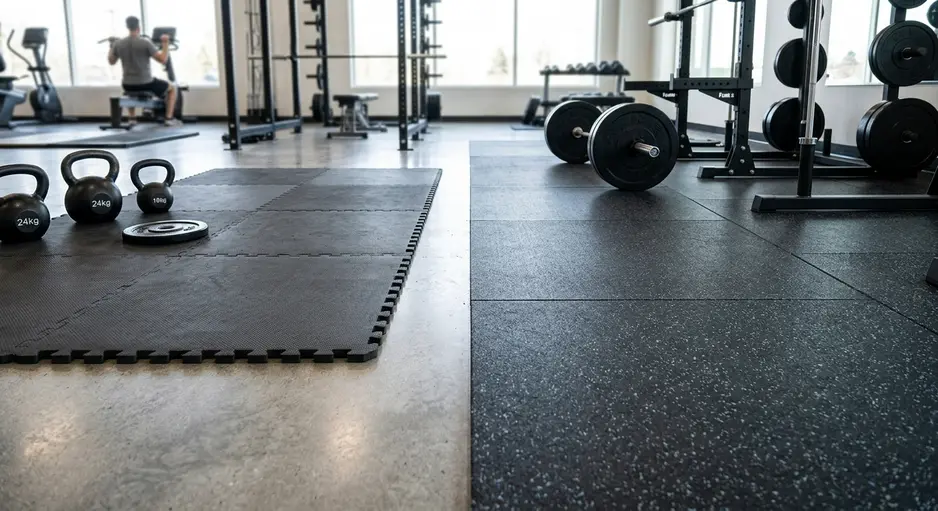
Gym mats: Home gyms, lifting zones, equipment areas, and temporary layouts.
Rubber rolls: Commercial gyms, large rooms, cardio areas, and long floor runs.
Installation
Gym mats: Easier to carry, position, trim, and install without professional help.
Rubber rolls: Heavier and harder to handle. Large projects may need adhesive and trained installers.
Seams and Appearance
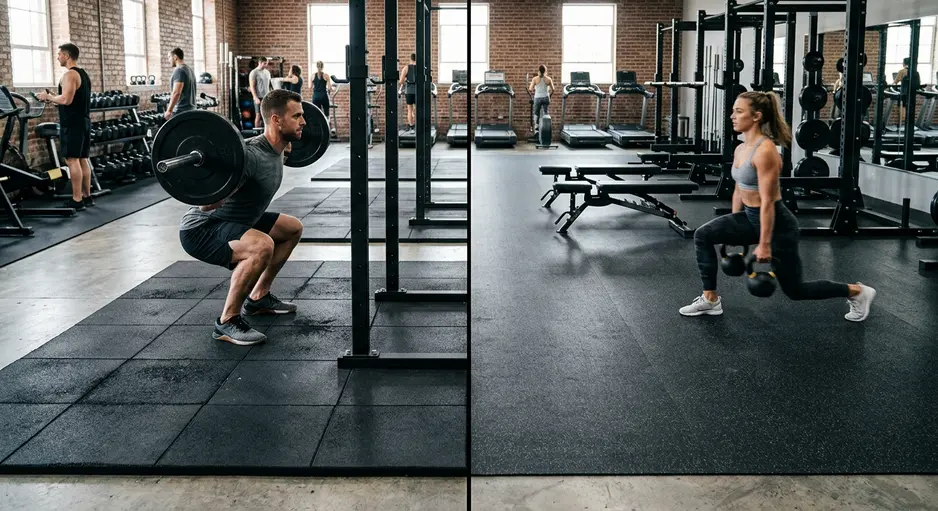
Gym mats: Create more seams and have a modular appearance.
Rubber rolls: Create fewer seams and a more continuous floor surface.
Replacement and Portability
Gym mats: Individual pieces can be moved or replaced.
Rubber rolls: Usually form a more permanent installation, so local repairs may be harder.
Cost
Gym mats: May cost more per square foot, but DIY installation can reduce labor costs.
Rubber rolls: May offer efficient material coverage in large rooms. Freight, adhesive, and installation can raise the final cost.
Moisture Management
Gym mats: Can be lifted to inspect and dry the subfloor.
Rubber rolls: Need correct preparation because moisture may become trapped beneath the flooring.
The Short Verdict
Choose interlocking gym mats when flexibility, easy installation, and local repairs are the main goals. Choose rubber rolls for gym flooring when you need broad coverage, fewer joints, and a consistent commercial appearance.
Format is only one part of the decision. Density, thickness, rubber formulation, and installation quality can have a greater effect on long-term performance.
What Are Gym Mats?
Gym flooring mats are modular sections placed over concrete, wood, or another suitable base. They may have straight edges, interlocking edges, or a design made for loose-lay or adhesive installation.
Some products cover an entire room. Others protect selected areas under power racks, benches, treadmills, cable machines, and free weights.
Benefits of Shock-Absorbing Gym Mats
- Individual sections are easier to carry and position.
- Interlocking gym mats are practical for many DIY projects.
- Damaged or stained pieces can be replaced separately.
- Mats work well in small or irregular rooms.
- Flooring can be moved if the gym layout changes.
- Thicker mats can add protection in lifting and equipment zones.
Limitations of Gym Flooring Mats
The main drawback is the number of seams. Dirt, moisture, and cleaning residue can collect between poorly fitted pieces. Lightweight mats may also shift, curl, or separate during sled work and other lateral movements.
A thick mat is not automatically a better mat. Density and resistance to long-term compression matter too. A soft product may dent under heavy equipment or make machines feel less stable.
What Are Rubber Flooring Rolls?
Rubber flooring rolls are long sheets supplied in set widths and selected lengths. Common options include recycled rubber flooring, EPDM-fleck surfaces, standard-density products, and denser vulcanized rubber flooring.
Because each roll covers a larger area, fewer seams are needed. This makes rubber gym flooring popular in commercial fitness centers and large rectangular rooms.
Why Large Gyms Use Rubber Rolls
- They cover broad areas with fewer joints.
- They create a uniform and professional appearance.
- Routine cleaning is easier when seams are fitted and sealed correctly.
- They work well for permanent glue-down installations.
- They provide consistent support across cardio and strength areas.
Challenges of Rubber Rolls
Rubber rolls can be very heavy. Moving, turning, and aligning them may require several people. Cutting around walls, columns, drains, and fixed equipment also takes skill.
Glue-down gym flooring installation requires a clean, flat, and dry base. Concrete may need moisture testing before work begins. Rolls may also need time to acclimate and relax before trimming.
How Do Mats and Rolls Perform in Real Gyms?
Durability and Impact Resistance
Impact-resistant rubber flooring depends on its density, composition, thickness, and installation. The number of seams alone does not determine durability.
Mats provide concentrated protection in weight rooms and under heavy machines. Rolls spread protection evenly across larger areas. However, thin rolled flooring should not be expected to handle repeated heavy barbell drops without extra protection.
Installation and Subfloor Needs
Mats may be loose-laid, interlocked, taped, or bonded. Rolls can use perimeter tape, partial adhesion, or full-spread adhesive. The right method depends on room size, traffic, product design, and subfloor conditions.
Concrete must be clean, level, and within the moisture limits set for the flooring and adhesive. Wood floors should be stable and compatible with the rubber. Radiant-heated floors require confirmation that every part of the system can tolerate the operating temperature.
Cleaning, Hygiene, and Moisture
Rolled flooring has fewer joints where debris can gather. Mats have more seams, but individual pieces can be lifted to inspect the surface underneath.
Moisture-resistant gym flooring is not a waterproof system. Water may pass through seams or become trapped below the rubber. Use a manufacturer-approved neutral-pH cleaner and avoid excess water, harsh solvents, and unapproved degreasers.
Noise and Vibration Control
Both formats can reduce impact noise and vibration. They should not be described as fully soundproof gym flooring. Results depend on the rubber, subfloor, building structure, equipment, and type of impact.
What Rubber Flooring Thickness Does a Gym Need?
Thickness should match equipment loads and impact levels. The following ranges are useful starting points, but they are not universal specifications.
- Yoga, stretching, and light exercise: 4–6 mm
- Cardio and selectorized machines: 6–8 mm
- General strength training: 8–10 mm
- Free-weight areas: 10–15 mm
- Heavy lifting or repeated drops: 15 mm or more, or a dedicated lifting system
Does Thicker Flooring Always Work Better?
No. A thicker product may absorb more impact, but density, elasticity, surface texture, and manufacturing quality also affect performance. Flooring that is too soft can reduce equipment stability.
Recycled Rubber vs Vulcanized Rubber
Recycled rubber flooring is durable and cost-effective. It often uses post-consumer or post-industrial rubber and is common in home and commercial gyms.
Vulcanized rubber flooring is usually denser, less porous, and more dimensionally stable. It can be easier to maintain in hygiene-sensitive settings, although it often carries a higher material cost.
Which Flooring Is Best for Your Gym?
Home Gym
Gym mats are a strong choice for a small room, garage, or rented property. They are easier to install and remove, and they allow local replacement if one area becomes damaged.
Commercial Fitness Center
Rubber rolls often work well in large facilities because they cover long runs efficiently. Fewer seams can reduce movement and support a predictable cleaning routine.
Weight Room
Weight room flooring must reflect how weights are used. General strength areas may perform well with thick mats or rolls. High-impact lifting zones often need dedicated tiles, mats, or platforms over the main floor.
How to Compare a Flooring Supplier
Ask for More Than Material Cost
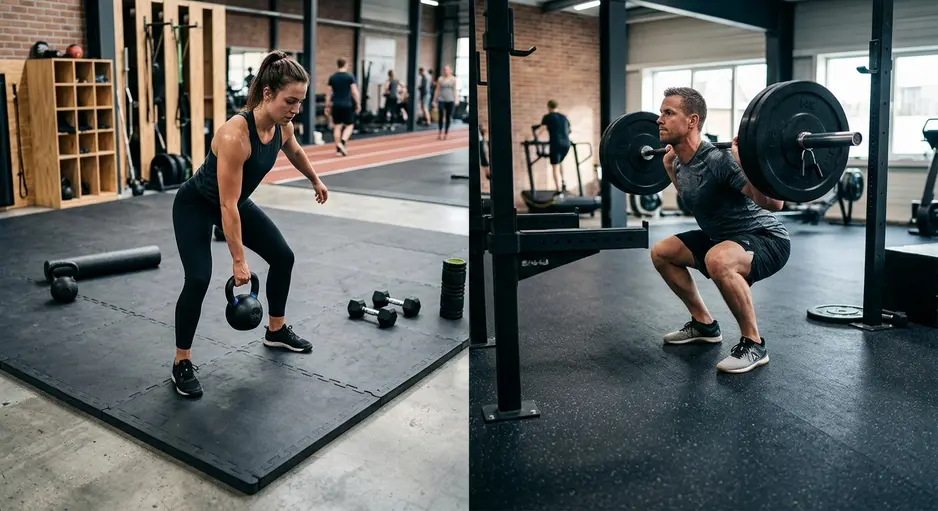
A dependable gym mat supplier, rubber roll supplier, or gym flooring manufacturer should help you select a product based on actual use rather than price alone.
- Product dimensions and permitted tolerances
- Available thicknesses, density, or hardness
- Recommended equipment and training applications
- Subfloor and installation instructions
- Compatible tapes, adhesives, and cleaners
- Warranty coverage and exclusions
- Packaging, freight, and minimum order details
- Samples or color swatches when available
Explore Gym Mats & Rubber Rolls
Conclusion: Mats for Flexibility, Rolls for Scale
In the gym mats vs rubber rolls comparison, mats are ideal for flexible layouts, targeted protection, and easier DIY work. Rolls are often the stronger choice for large, permanent spaces that need fewer seams and consistent coverage.
Choose according to equipment, impact, subfloor, acoustics, cleaning needs, and total installed cost—not appearance alone.
FAQs About Gym Mats and Rubber Rolls
1. Are Rubber Rolls Cheaper Than Mats?
Rolls may have a lower material cost per square foot in large facilities. However, freight, adhesive, subfloor preparation, and professional labor can increase the installed cost.
2. Which Option Is Easier to Install?
Loose-lay and interlocking gym mats are usually easier for DIY installation. Rolls are heavier and require accurate cutting and alignment.
3. Can Rubber Flooring Be Installed Over Concrete?
Yes, if the concrete is clean, flat, sound, and within the stated moisture limits. New slabs must cure fully.
4. Is Rubber Gym Flooring Waterproof?
The rubber material resists moisture, but the installed floor may not be waterproof. Water can enter through seams or become trapped underneath.
5. How Long Does Rubber Flooring Last?
Service life depends on product quality, density, thickness, traffic, equipment loads, cleaning, and installation.