Water, sweat, mud, and grease can make a busy floor unsafe. The right rubber flooring helps control these risks, but each format serves a different purpose. Ring mats work well in wet, localized zones because their openings allow liquid and debris to drain below the walking surface.
Choose solid gym mats when you need modular impact protection. Use rubber rolls for large workout areas that need broad, even coverage. Before buying, compare moisture exposure, foot traffic, equipment loads, cleaning needs, and installation limits. Product claims should also be supported by clear technical data and relevant test reports.
What Are Ring Mats, and Where Should You Use Them?
How Ring-Pattern Drainage Works
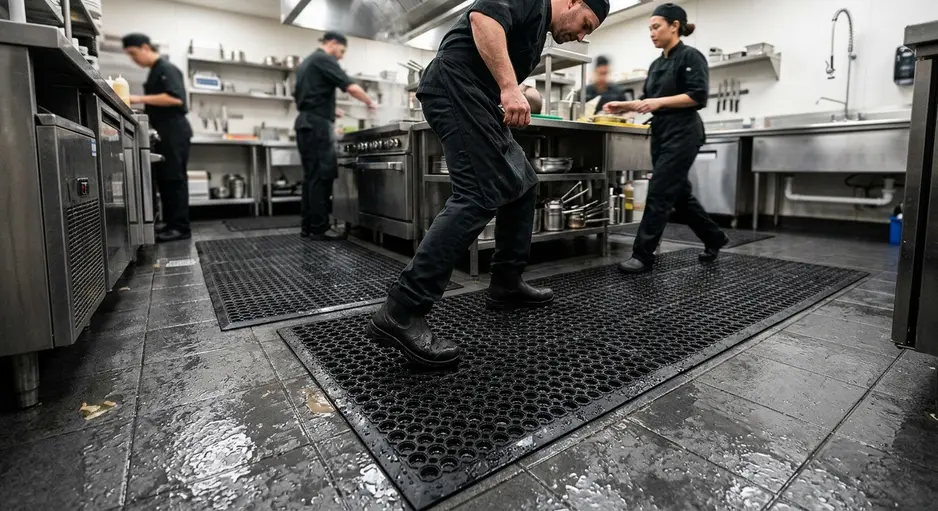
Ring mats have open holes in a circular or honeycomb pattern. Water, dirt, and small debris pass through these openings. This keeps much of the contamination below the main walking surface and helps footwear maintain contact with the textured rubber.
Best Applications for Ring Mats
Drainage mats are often useful in areas where water or other liquids appear throughout the day. Common locations include:
- Commercial entrances exposed to rain or mud
- Locker rooms and changing areas
- Pool transition zones
- Restaurant kitchens and washing stations
- Industrial standing areas
- Garage wash bays
- Wet zones near gym entrances and water stations
How Do You Choose a Ring Mat for a Wet Area?
Check Wet Slip Resistance
Do not rely on an “anti-slip rubber flooring” label alone. Ask the supplier which traction test was used and whether it covered wet conditions. Soap, grease, cleaning chemicals, footwear, and wear can all change how a mat performs.
Match the Rubber to the Contaminant
General-purpose rubber may be suitable for water and normal foot traffic. Kitchens and oily work areas often need a nitrile blend that can resist grease and oils. Always verify resistance to the exact substances used at the site.
Select the Right Rubber Mat Thickness
Rubber mat thickness affects comfort, drainage clearance, edge height, stability, and portability. A thicker mat may feel better during long periods of standing, but it may also create a higher edge that is harder for carts or wheeled users to cross.
Inspect Openings, Edges, and Connectors
Large openings can improve drainage, but they may catch heels, narrow wheels, or small items. Beveled edges help create a smoother transition and reduce trip risk. Connectors can stop adjacent mats from separating in busy spaces.
Confirm Load and Traffic Capacity
Consider daily foot traffic, trolleys, static furniture, and dropped objects. Ask for data on hardness, tear strength, compression, and intended load conditions.
Gym Mats vs Rubber Rolls vs Ring Mats
| Factor | Ring Mats | Interlocking Gym Mats | Rubber Rolls |
|---|---|---|---|
| Best use | Localized wet zones | Modular workout areas | Large gym floors |
| Drainage | Excellent | Usually limited | Usually limited |
| Installation | Loose-laid or connected | DIY-friendly | More demanding |
| Replacement | Easy | Easy | More difficult |
| Seams | Many edges | Visible joints | Fewer seams |
| Cleaning | Clean above and below | Lift in sections | Easy surface cleaning |
Which Technical Specifications Matter Most?

Ask for Relevant Test Reports
A dependable gym mat supplier should be able to provide clear product details. For commercial projects, review wet traction, tensile and tear strength, hardness, density, compression recovery, fire classification where required, chemical resistance, UV and weather resistance, indoor emissions documents where applicable, and warranty terms.
Moisture Resistance Is Not Drainage
Moisture-resistant rubber flooring may tolerate contact with water, but water can still collect underneath it. Trapped moisture may cause odors or damage a sensitive subfloor. Review floor slope, drains, ventilation, waterproofing, and cleaning access.
What Flooring Works Best in Real Areas?
Wet Commercial Entrance
Use a heavy-duty ring mat with beveled edges and secure connectors. It should cover enough walking distance to remove a useful amount of water from footwear.
Locker Room or Pool Transition
Choose a comfortable drainage mat designed for wet, barefoot traffic. Check wet traction and make sure cleaning crews can lift or access it.
Commercial Kitchen Workstation
A grease-resistant nitrile ring mat with anti-fatigue properties is often the practical choice. Verify resistance to cooking oils, detergents, and cleaning chemicals used on site.
Home Workout Room
The best gym mats for home workouts are often solid modular tiles. They are simple to install, relocate, and replace. Keep ring mats for genuinely wet utility spaces or entry points.
Heavy-Duty Commercial Gym
The best rubber rolls for heavy-duty gyms offer wide coverage with fewer seams. Thicker gym mats can reinforce lifting stations and equipment zones. Use drainage mats near wet entrances, water points, or changing-room transitions.
How Should Rubber Mats Be Installed and Cleaned?
Rubber Flooring Installation Checklist
- Measure the area and plan each edge transition.
- Acclimate the flooring if the supplier requires it.
- Clean, repair, and dry the subfloor.
- Follow approved loose-lay or adhesive instructions.
- Use compatible connectors for modular ring mats.
- Keep raised edges away from main traffic routes.
- Confirm compatibility with waterproofing and underfloor heating.
Cleaning Ring Mats Properly
- Remove loose dirt and debris each day.
- Lift or move the mats on a set schedule.
- Clean both the mat and the floor below.
- Use chemicals that are compatible with the rubber.
- Rinse away detergent residue.
- Let the floor and mat dry where possible.
- Check for cracks, curling, blocked holes, and failed connectors.
How Do You Compare Suppliers and Flooring Prices?

Do not compare flooring by product price alone. Include freight, packaging, cutting waste, accessories, adhesive, labor, cleaning, downtime, and expected replacement. A cheap material may cost more if it wears quickly or takes longer to maintain.
Total lifecycle cost = purchase price + delivery + installation + maintenance + expected replacements
Buy Best Ring Mats For Busy Areas
Choose Flooring for the Risk, Not Just the Room
The gym mats vs rubber rolls decision should begin with the job each surface must do. Ring mats are the clear choice for localized drainage. Solid mats offer flexible impact protection, while rubber rolls provide efficient coverage across large training areas.
Before ordering, review wet traction, material composition, thickness, edge design, load capacity, cleaning access, and lifecycle cost. Technical documents and site conditions should guide the final choice.
Frequently Asked Questions
1. Are rubber ring mats safe when wet?
They can improve drainage and traction, but no mat removes all slip risk. Safety depends on the compound, texture, contaminants, cleaning schedule, installation, and verified wet-slip performance.
2. How thick should a rubber ring mat be?
Choose thickness based on traffic, load, drainage clearance, comfort, and edge transition. A thicker mat is not always better, especially where carts or wheeled users must cross it.
3. Can rubber rolls be used in wet areas?
Some rubber rolls tolerate moisture when the product, subfloor, and installation are designed for it. However, ordinary solid rolls do not provide the open drainage offered by ring mats.
4. What is the best flooring for a commercial gym?
A mixed layout often works best. Use rolls for general training areas, impact-resistant mats for free-weight zones, and drainage ring mats in wet transition spaces.