Industrial rubber mats and PVC mats are common choices for factories, warehouses, workshops, kitchens, and other busy workplaces. Yet the right option depends on more than the purchase price. You also need to consider liquids, chemicals, traffic, temperature, worker comfort, and cleaning needs.
In general, rubber offers strong grip, cushioning, impact resistance, and long-term resilience. PVC is often lighter, easier to handle, resistant to moisture, and available in practical modular designs. However, formulations vary. Buyers should always review technical data and test a product under real working conditions before making a final choice.
Rubber Mats vs PVC Mats at a Glance
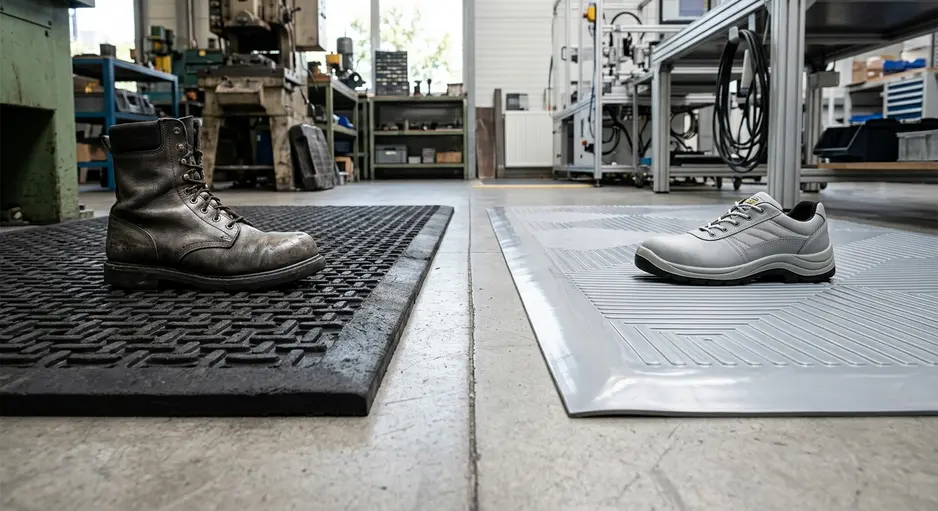
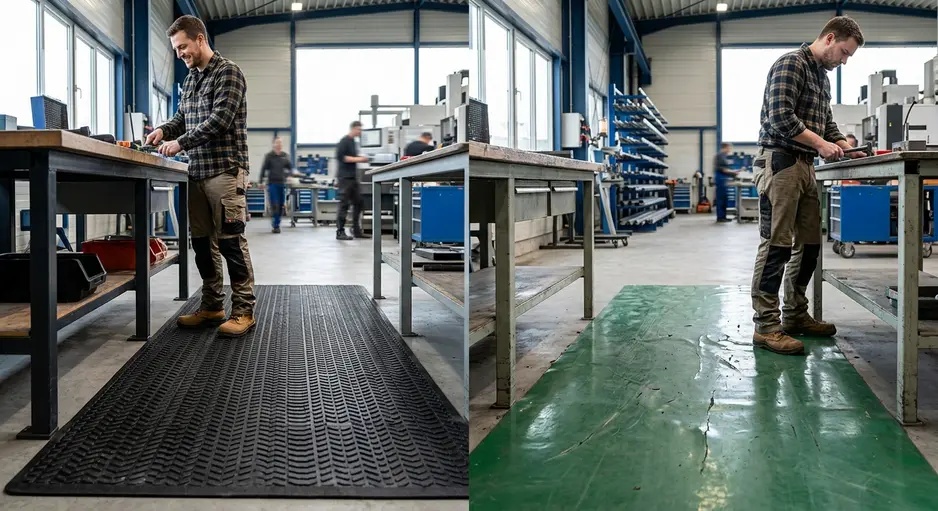
Industrial rubber mats are resilient flooring products made to improve traction, absorb impact, reduce fatigue, and protect the floor below. PVC mats are thermoplastic products often selected for moisture resistance, simple cleaning, modular coverage, and lower initial costs.
- Slip resistance: Textured rubber often provides excellent grip. PVC can also perform well when it has the right tread and drainage design.
- Worker comfort: Rubber usually offers more cushioning and resilience. PVC comfort depends on its thickness and construction.
- Oil resistance: Nitrile rubber is often used around oil and grease. PVC performance depends on the formulation.
- Chemical resistance: Both materials can resist selected chemicals, but compatibility must be confirmed.
- Temperature: The correct rubber compound often handles a wider temperature range. PVC can stiffen in cold areas or soften near heat.
- Heavy-duty use: Rubber is often preferred for impact, vibration, and demanding traffic.
- Cleaning: PVC floor mats are often easy to rinse. Deep textures and drainage holes require more attention in either material.
- Cost: PVC may cost less at first, while rubber can offer better lifetime value in demanding areas.
Material Construction and Flooring Properties
Industrial Rubber Flooring Properties
Rubber is elastic, so it can absorb shock and recover after pressure. This helps protect floors from dropped tools while reducing noise and vibration. Its natural resilience also makes many heavy duty rubber mats suitable for standing workstations and production areas.
PVC Mat Advantages
PVC mats are usually lightweight and easy to move. They can be produced as rolls, tiles, or interlocking modules, making it simple to cover unusual spaces or replace a damaged section.
Performance in Demanding Industrial Conditions
Slip Resistance
Slip resistance depends on tread design, drainage, contamination, footwear, and cleaning frequency. Textured rubber often delivers strong traction. PVC drainage mats can also provide reliable footing in wet areas when liquids can flow away from the walking surface.
Oil and Chemical Resistance
Oil resistant industrial mats require a compound that matches the contaminant. Nitrile rubber is commonly considered for petroleum oils, grease, and workshop fluids. PVC may resist many cleaners, acids, and alkalis, but compatibility should be confirmed for the exact product.
Heat, Cold, and Outdoor Exposure
Rubber compounds can be designed for temperature-resistant flooring applications. PVC can lose flexibility in very cold conditions and may soften around high heat. Product-specific temperature ratings should always be checked.
Heavy Loads and Wheeled Traffic
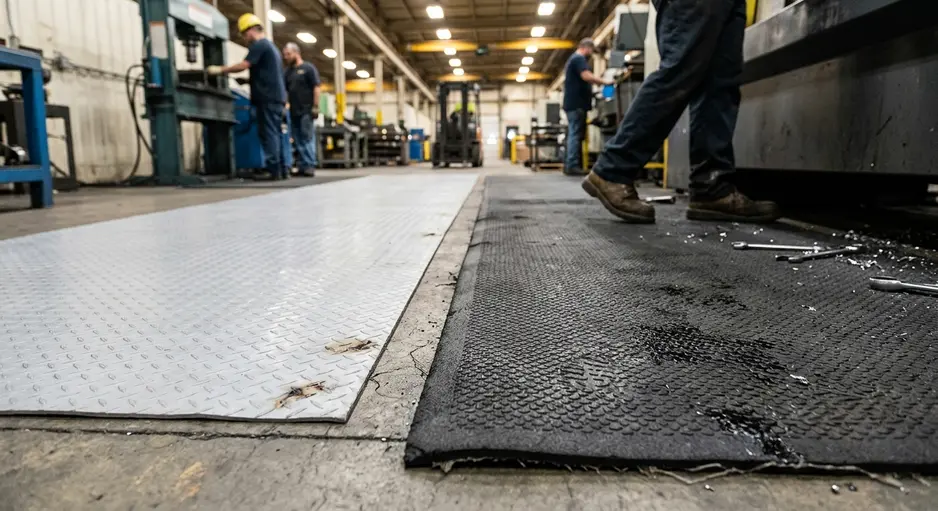
Rubber often handles machinery vibration, dropped tools, and repeated foot traffic well. PVC can work well for lighter traffic, but thin modules may shift or separate under turning wheels. A site trial is useful for checking wheel movement, edge stability, and surface wear.
Best Mats for Factories and Workplaces
Assembly Lines and Standing Workstations
Workers who stand for long periods may benefit from a firm, resilient mat. The mat should have secure placement and beveled edges and should not feel so soft that it reduces balance.
Warehouses and Heavy-Traffic Areas
Warehouse floor protection should resist abrasion, movement, and damaged edges. Heavy traffic area mats must also allow carts to pass without catching.
Oily Workshops and Commercial Kitchens
Workshops and kitchens need drainage, grease resistance, and frequent cleaning. A documented nitrile rubber compound may suit oily floors. Certain PVC products may also work if compatibility is confirmed.
Electrical Work Areas
Ordinary rubber does not automatically protect against electrical shock. Electrical insulation mats must be tested, rated, and marked for the intended voltage and applicable standard. Never treat a general-purpose rubber or PVC mat as electrical protective equipment.
Washdown and Wet-Processing Areas
Open-grid rubber and PVC mats can keep workers above standing water. PVC is easy to handle, while rubber may provide more weight and grip. In either case, the mat must be lifted during cleaning.
Durability, Maintenance, and Lifetime Cost
Which Material Lasts Longer?
An industrial mat durability comparison must account for traffic, thickness, compound quality, chemicals, heat, and cleaning methods. Rubber frequently lasts longer in high-impact environments. PVC may provide better value where lightweight sections are moved, replaced, or reconfigured often.
Maintenance Requirements
- Sweep or vacuum loose dirt and metal fragments.
- Wash the surface with a compatible neutral cleaner.
- Avoid solvents unless the manufacturer approves them.
- Lift the mat and clean the floor underneath.
- Allow the floor and mat to dry fully before replacement.
- Inspect the tread, edges, backing, and drainage holes.
Total Cost of Ownership
Lifetime cost = purchase price + installation + cleaning labor + replacement cost + downtime
How to Choose Between Rubber and PVC Mats
Workplace Hazard Assessment
- Dry, wet, oily, or chemical exposure
- Indoor or outdoor installation
- Minimum and maximum temperature
- Daily standing time and worker movement
- Machinery, carts, and static loads
- Cleaning products and washdown methods
- Drainage and hygiene needs
- Electrical and fire hazards
Match the Material to the Main Hazard
Choose rubber when resilience, traction, impact absorption, and worker comfort are priorities. Consider a documented nitrile-containing compound for oil and grease. Choose PVC for lightweight modular coverage, moisture exposure, drainage, or easier handling.
Request a Sample and Run a Site Trial
A trial of 7 to 30 days can reveal issues that are not clear from a brochure. Check movement, edge lift, comfort, odor, staining, cleaning time, cart travel, and tread wear.
Choosing an Industrial Mat Supplier
What Should You Ask a Rubber Mat Manufacturer?
A reliable industrial mat supplier should provide clear information about composition, dimensions, hardness, tensile strength, abrasion, temperature range, and chemical compatibility.
Buying Bulk Rubber Mats for Factories
When working with an industrial rubber mats wholesale supplier, confirm minimum order quantities, production lead times, packaging, custom sizes, colors, interlocking options, and replacement availability.
Evaluating an Exporter and Supplier
An industrial mat exporter and supplier should provide technical documents, export paperwork, delivery terms, secure packaging, and after-sales support.
Explore Industrial Rubber Mats & PVC Mats
Conclusion
The choice between industrial rubber mats and PVC mats should begin with a workplace risk assessment. Rubber generally excels in grip, cushioning, impact protection, and heavy-duty performance. PVC often provides useful moisture resistance, modular coverage, simple handling, and easy cleaning.
Formulation and tested performance matter more than the material name. Review technical documents, confirm relevant certifications, and test samples in the intended area.
Frequently Asked Questions
1. Are rubber mats more durable than PVC mats?
Rubber often performs better under impact, vibration, and demanding foot traffic. However, actual durability depends on compound quality, thickness, loads, chemicals, temperature, and maintenance.
2. Are PVC floor mats suitable for factories?
Yes. PVC floor mats can suit wet zones, modular installations, and light- to medium-duty work areas. Their load rating, tread, chemical resistance, and temperature range must match the site.
3. Which mat is best for oily factory floors?
Nitrile rubber is commonly considered for oily factory floors. Still, the specific oil, operating temperature, concentration, and contact time must be checked against compatibility data.
4. Which material is easier to clean?
PVC is often easier to rinse because it has a nonporous surface and lightweight construction. Textured or perforated mats made from either material require cleaning on both sides.
5. Can ordinary rubber mats prevent electrical shock?
No. Only use electrical matting tested and marked to the required voltage class and safety standard.